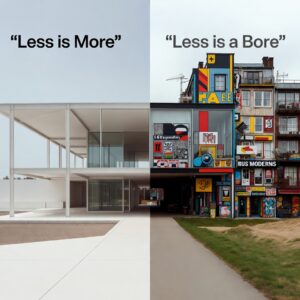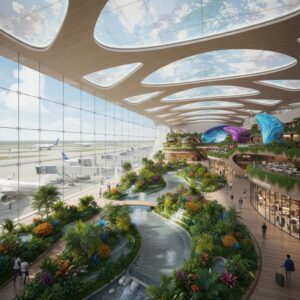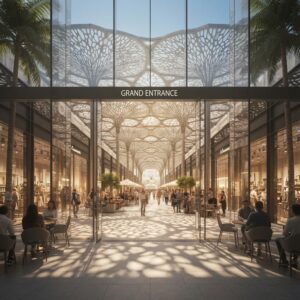
Which one do you prefer?
Some defend Modernism.
Others celebrate Postmodernism.
But I think we may be asking the wrong question.
The real question is not whether less is more or less is a bore.
The real question is:
Why were these ideas created in the first place?
Mies was not simply telling architects to make everything minimal.
He was responding to a world facing industrialization, rapid urbanization, limited resources, and the need to build more efficiently for society.
His question was something like:
“Why should we add unnecessary elements if they do not improve architecture?”
For Mies, removing unnecessary ornament was not simply an aesthetic preference.
It was a search for clarity.
A search for honesty.
A search for what was essential.
Then, decades later, Robert Venturi looked around and saw something different.
Modern architecture had become so disciplined that many buildings no longer reflected the richness and complexity of human life.
People are not machines.
Cities are not laboratories.
History, culture, humor, contradiction, symbolism, and everyday experience all matter.
So Venturi responded with another famous statement:
“Less is a Bore.”
Again, this was not simply an invitation to add decoration.
It was a response to a different problem.
His question was:
“Why have we reduced architecture to pure form while ignoring the complexity of human life?”
Suddenly, the debate was no longer only about ornament.
It was about people.
Looking back, I think both architects were asking the same fundamental question:
What is architecture really for?
One removed unnecessary elements to reveal what mattered.
The other reintroduced complexity because something important had been lost.
But both began with the same habit:
They questioned the assumptions of their time.
And this is the lesson we should remember today.
Architecture does not advance because we repeat design styles.
It advances because we continue asking meaningful questions.
That is one of the ideas behind Design Beyond Form.
Before asking,
“What should this building look like?”
perhaps we should first ask,
“Why does this building need to exist, and what human problem is it trying to solve?”
Because architecture has never progressed by copying old answers.
It progresses by asking better questions.

It’s not the form—it’s the context.
Go find out why.