Every city eventually faces the same question:
How do we encourage people to leave their cars behind?
The answer is rarely found in building a longer walkway.
The world’s most walkable cities first remove the everyday barriers that prevent people from walking.
Seoul transformed an elevated highway into Seoullo7017, reconnecting parts of the city divided by vehicle infrastructure.
NewYork converted an abandoned railway into the HighLine, bringing new life to existing neighbourhoods.
Both succeeded because they strengthened places people were already using.
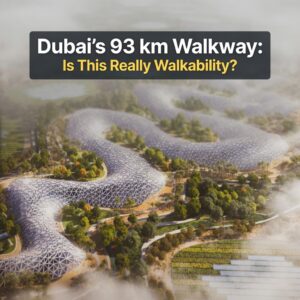
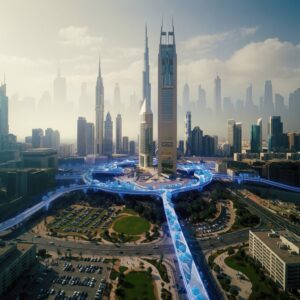
Dubai’s proposed 93 km Loop is ambitious. But can one continuous pedestrian corridor fundamentally change how people move around the city?
Cities are rarely experienced over 93 kilometres.
They are experienced over the first few hundred metres after leaving home, stepping out of a Metro station, or arriving at work.
That is where people decide whether walking is easier than driving.
Dubai has already demonstrated this principle.
The pedestrian link between Dubai Mall Metro Station and Dubai Mall stretches nearly 800 metres.
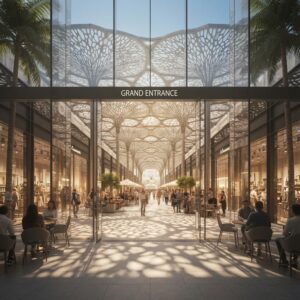
Thousands use it every day because the journey is comfortable, shaded, air-conditioned, and directly connected to where they want to go.
Its success is not determined by length.
It succeeds because it removes friction from an everyday journey.
Let’s consider HongKong.
Despite its hot and humid climate, it remains one of the world’s most walkable cities.
The reason is not one iconic pedestrian project.
It is a network of elevated walkways, underground passages, public transport, and mixed-use development connecting residential areas, offices, hotels, retail, and transit stations.
People rarely stop to decide whether they should walk.
They simply walk naturally.
Walking has become part of everyday life because the city is designed that way.
That is the lesson Dubai should explore.
Rather than concentrating investment into one continuous corridor, imagine applying the same ambition to every Metro station.
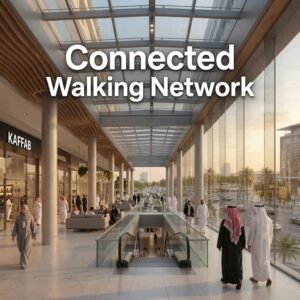
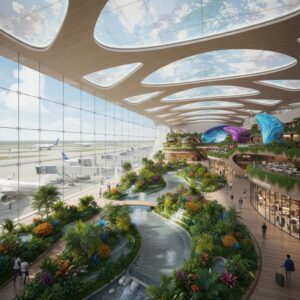
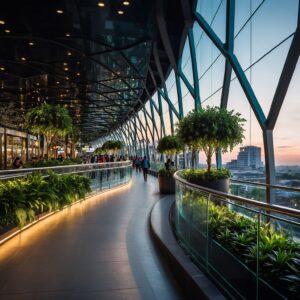
Imagine shaded, climate-responsive connections between offices, residential communities, parks, retail, schools, hotels, and waterfronts.
Not one extraordinary project.
Thousands of meaningful connections.
Together, they could reduce car dependence while making walking the more convenient choice.
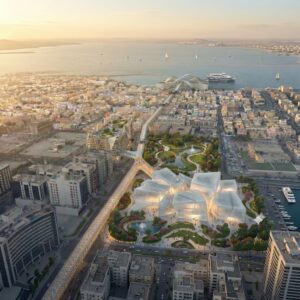
This thinking became one of the foundations behind my proposal Masari Walk.
The objective was never to create another landmark.
It was to create a connected urban layer where walking naturally becomes part of everyday life, even within Dubai’s climate.
Walkability is not created by kilometres.
It is created by continuity.
Perhaps the future of Dubai is not defined by the world’s longest pedestrian loop.
Perhaps it is defined by how effortlessly people can move between the places they use every day.
That is Design Beyond Form.

It’s not the form—it’s the context.
Go find out why.