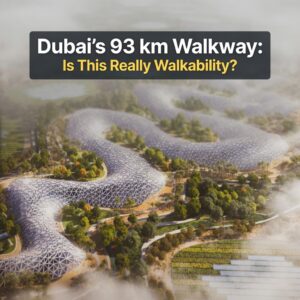
Every time I see Dubai’s proposed 93 km walkable corridor, I ask the same question:
Why 93 kilometers?
Every major urban intervention should begin with a clearly defined problem, not with the size of the solution.
Walking is not an attraction or destination. It is a daily habit.
A long pedestrian corridor may look impressive in a rendering, but if it functions mainly as a destination rather than becoming part of people’s everyday routes, have we really created a walkable city?
Walking should begin at your front door.
Can you walk to breakfast, buy groceries, meet a neighbor, or take your child to a park without driving?
Dubai also faces a climate reality. For nearly half the year, outdoor walking is uncomfortable. Even Marina and Downtown become difficult to enjoy during the hottest months.
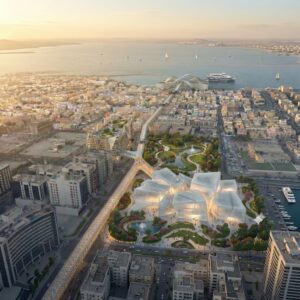
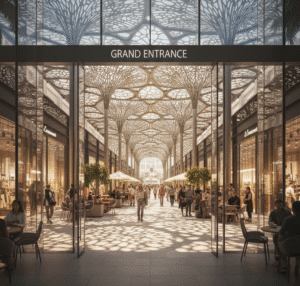
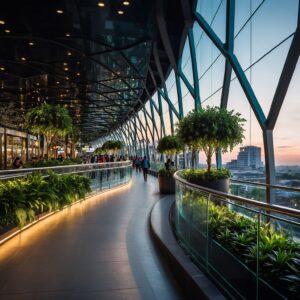
This thinking led me to propose Marasi Walk Dubai, an indoor, climate-responsive pedestrian network connecting nearby communities, workplaces, retail, and public spaces throughout the year.
Walkability is not only about distance.
It is about comfort, convenience, proximity, safety, and making walking the easiest choice.
Instead of focusing first on one continuous corridor, we should strengthen existing neighborhoods, connect everyday destinations, improve shaded and climate-responsive routes, mix uses, and reduce the need for daily car trips.
Great cities are not created by designing what looks impressive.
They are created by understanding how people actually live.
This is Design Beyond Form.
And we really want to walk.

It’s not the form—it’s the context.
Go find out why.