
London’s decision to remove traffic from part of Oxford Street is something I welcome. From 26 October 2026, the stretch between Orchard Street and Great Portland Street is scheduled to become pedestrianised, beginning a phased transformation.
I strongly believe most cities should prioritise walking and remove cars where this can improve everyday life. It is encouraging to see that belief being taken seriously on such a prominent street.
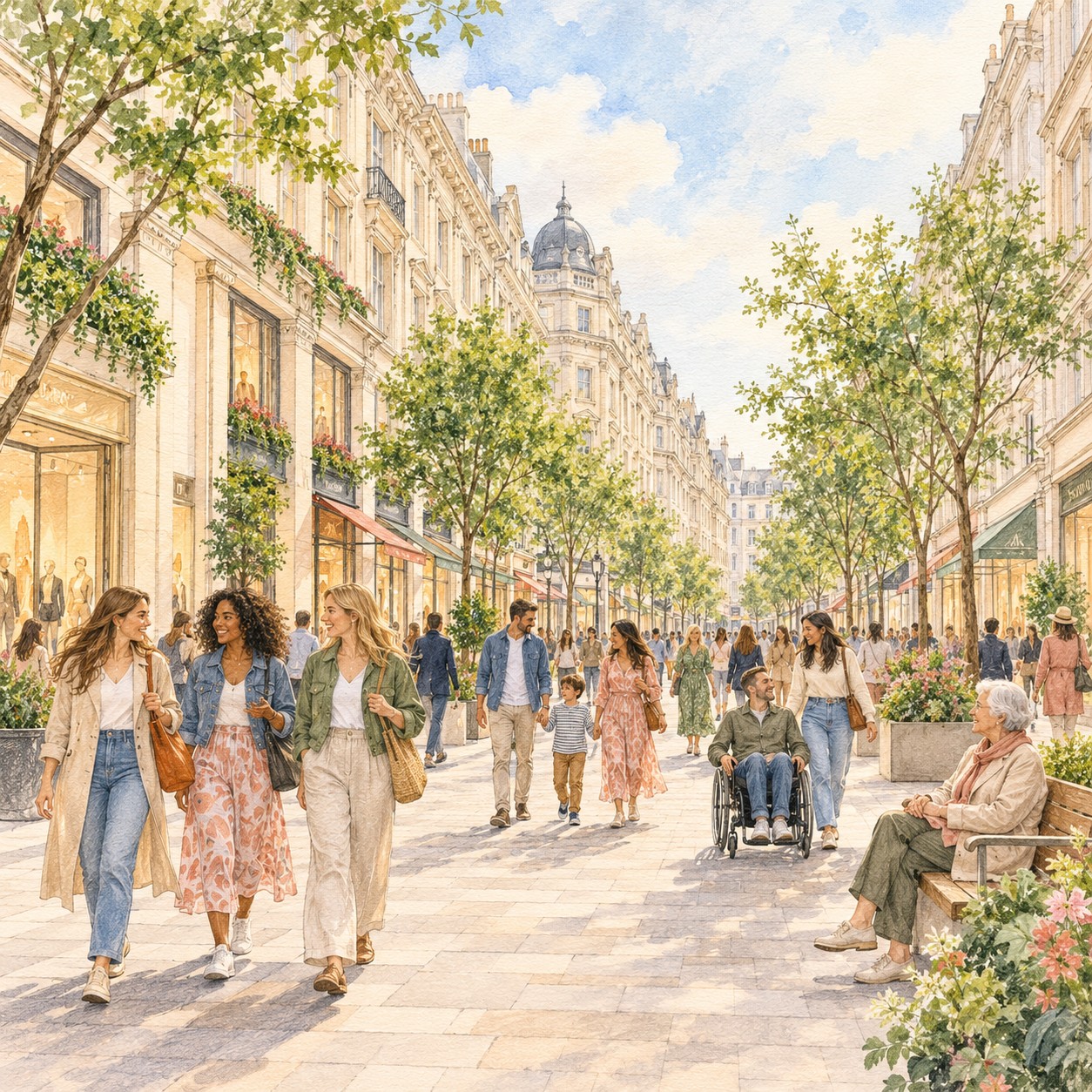
Conceptual illustration of a car-free street and pedestrian life. This is not an official design for Oxford Street.
Who is behind the initiative?
London Mayor Sadiq Khan has led the current initiative, announcing renewed plans on 17 September 2024 with backing from the UK government. The ambitions include a greener, cleaner and safer public space, alongside a stronger retail and leisure destination.
The idea has a longer history. Proposals to make Oxford Street more pedestrian-friendly predate Khan. His own 2017 pedestrianisation scheme did not proceed after Westminster City Council withdrew support in 2018, as outlined in the London Assembly’s account of pedestrianising Oxford Street. He deserves credit for returning to the idea and helping move it toward implementation.
What interests me is the thinking behind it. A shopping street depends on people wanting to be there. Giving them room to walk, pause, meet and explore creates an opportunity to improve both public life and the experience of visiting local businesses. The results will need to be assessed as the changes take shape.
Making the whole journey work
Removing traffic comes with responsibilities. Drivers need workable alternative routes. Bus passengers still need convenient access. Deliveries must reach businesses, and people who depend on vehicles must be able to get close enough to their destinations.
These concerns belong within the design process. We need to understand what happens on neighbouring streets and consider the whole journey, particularly for people with limited mobility. A more walkable street should welcome people with different abilities and needs.
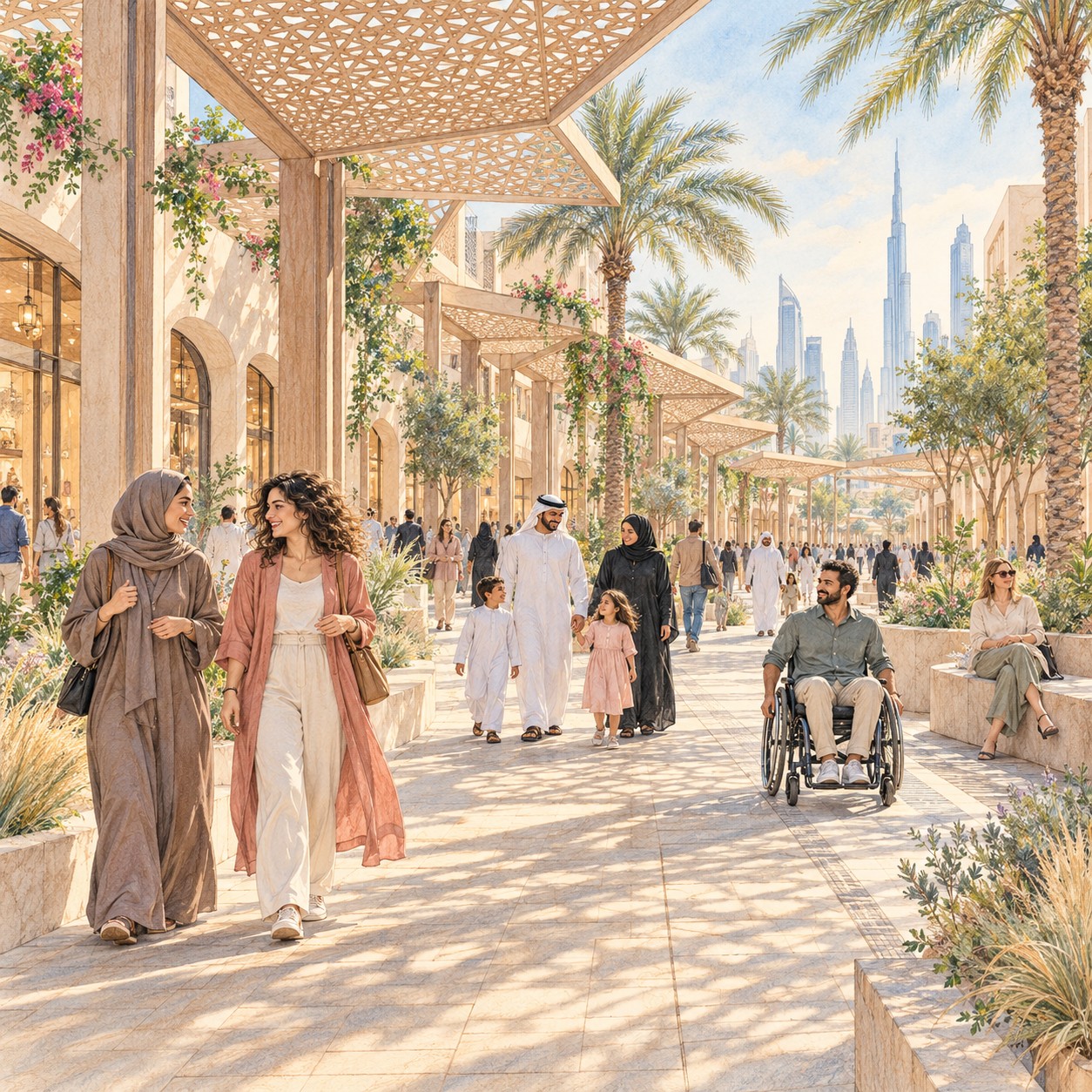
Conceptual illustration of shaded pedestrian life in Dubai. This is not an official design for Masari Walk.
What this means for Masari Walk
This connects closely with why I am developing Masari Walk for Dubai. The priority is similar: giving people more opportunities to walk comfortably in daily life. Dubai’s approach must respond to its own heat, distances, road network and connections between neighbourhoods and public transport.
For Masari Walk, I want to explore how better connections could make walking practical between places people already need to reach. Shade, protection from heat, continuity and accessibility need careful study. I want the authorities to explore the idea further, with pilot projects offering a way to learn before considering wider development.
London’s initiative gives me encouragement. Dubai can learn from its decisions while finding its own way. I hope to contribute to a city where walking becomes easier to choose and people have more opportunities to enjoy the place they live.
Why Walking in Dubai Is So Hard — And What Could Fix It
Related viewing: The Sidewalk Is Where Friendship Begins – What If Dubai Walked Like This? and Why Walking Makes Us Feel Like We Belong.
Access and timing: what changes on Oxford Street
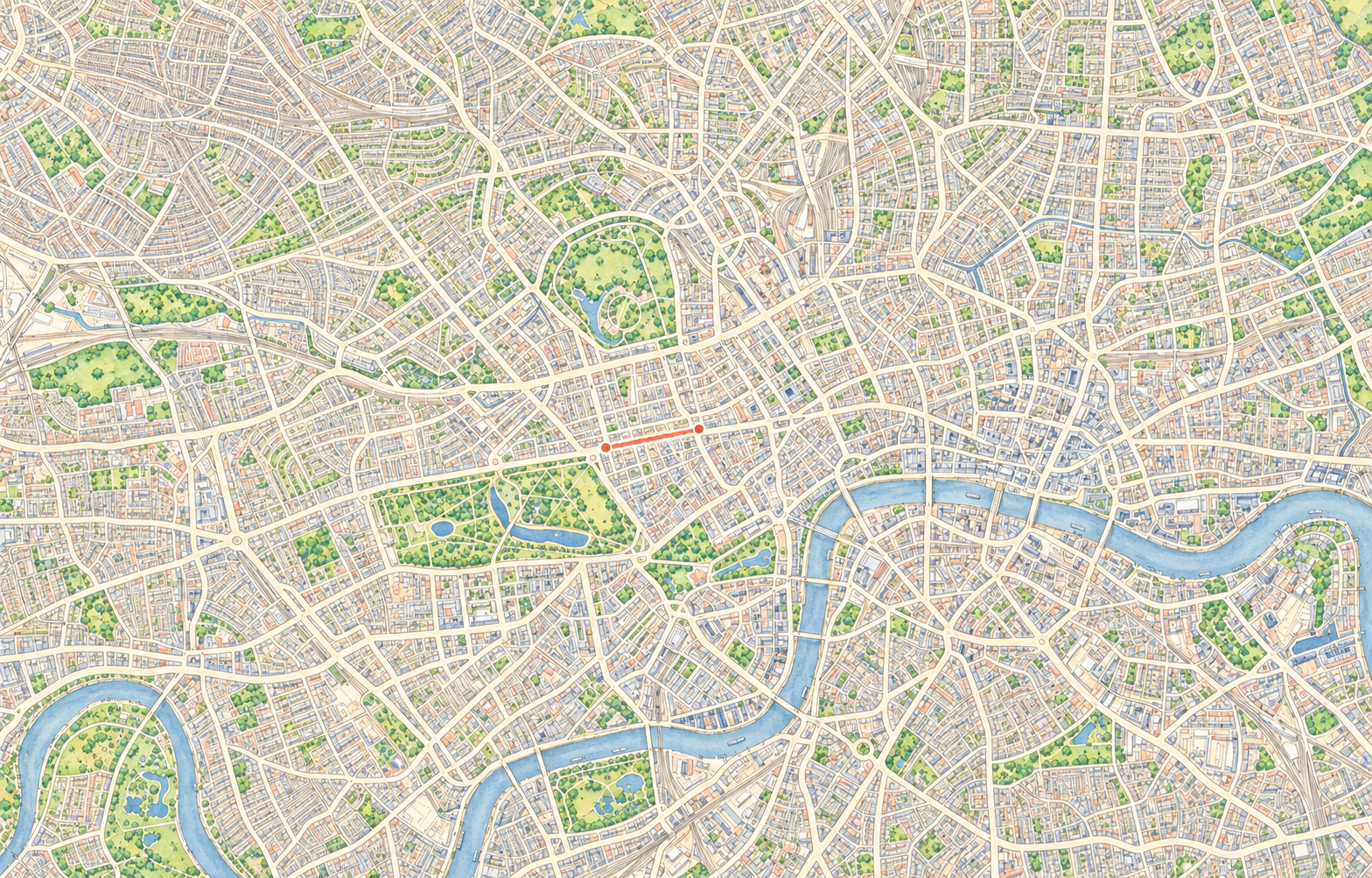
Illustrative overview of central London, locating Oxford Street within its wider context.
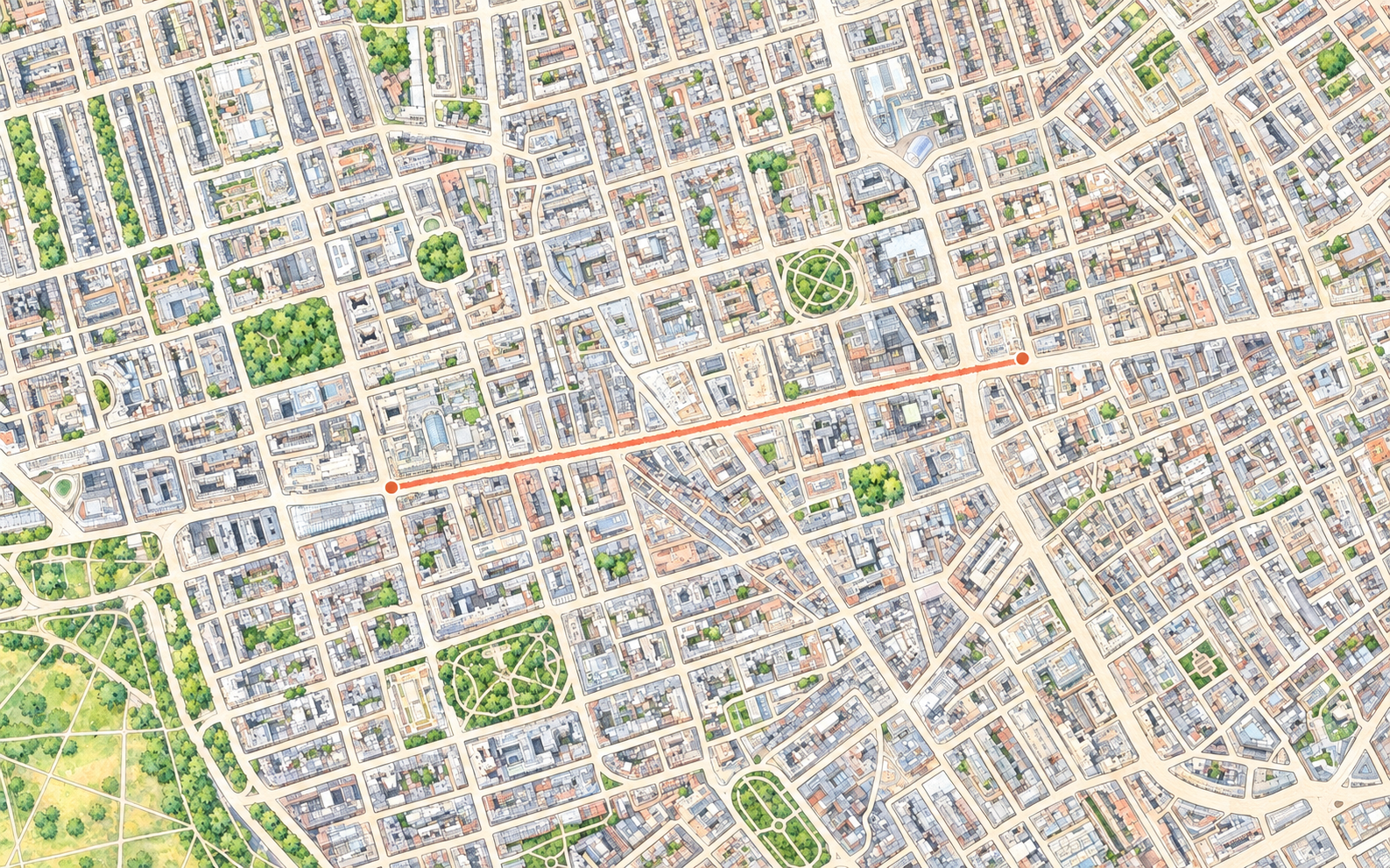
Illustrative close-up of the Oxford Street corridor. Refer to TfL for exact restrictions and access arrangements.
- Scheduled start: Monday 26 October 2026, between Orchard Street and Great Portland Street.
- Cars, buses, taxis, bicycles, pedicabs and e-scooters will not be permitted along the pedestrianised section.
- North–south crossing roads remain open, including Regent Street. The map should not be read as a completely vehicle-free district.
- Mobility scooters and emergency vehicles retain access at all times. Freight and loading access is permitted between midnight and 07:00.
- Bus-service changes begin on 24 October. Alternative stops will be approximately 200 metres from the traffic-free area, not necessarily from an individual shop. Taxi ranks will be within 100 metres of the area.
- Routes and access may change during works. Check TfL’s Oxford Street area works guidance before travelling.
Explore the proposal: Masari Walk.