
I’ve experienced traffic in many cities.
But one moment still stays with me.
Mumbai. 2007.
I was there for the airport project.
And the traffic—
it wasn’t just busy.
It was overwhelming.
Not the kind you forget.
The kind that stays with you.
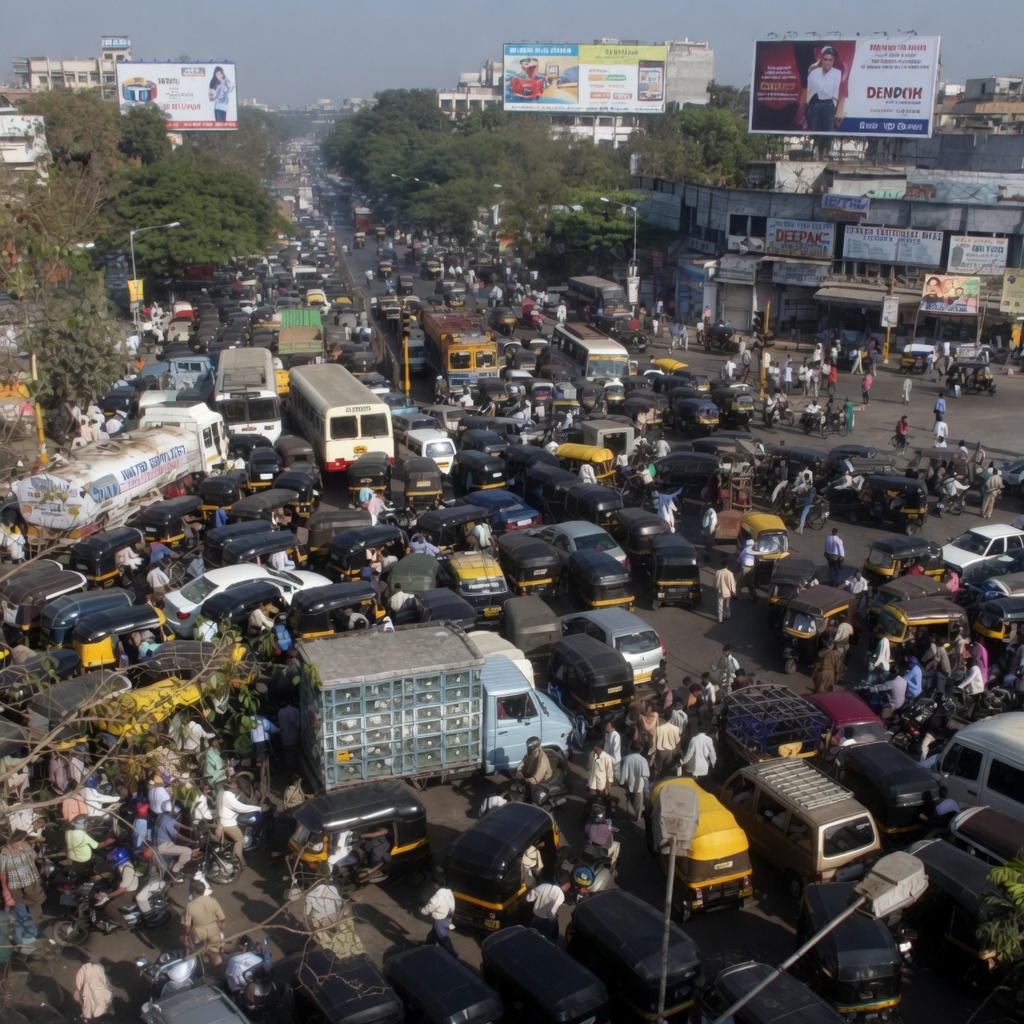
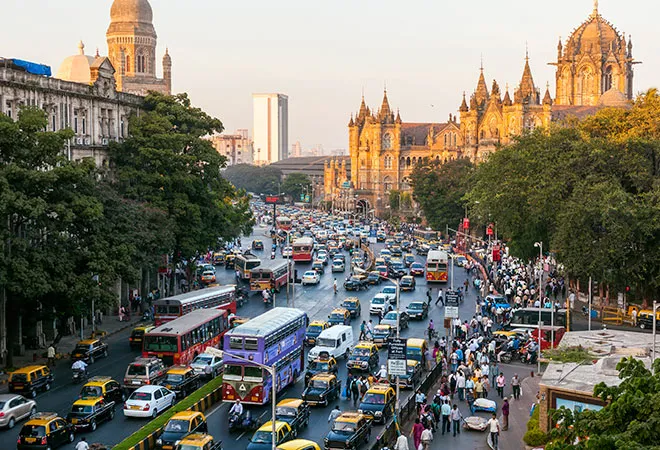
Even today, nothing has really changed.
Most major cities still struggle with the same issue.
Dubai is no different.
But here, you can feel it by season.
In summer, the city breathes.
People leave. Schools close.
The roads loosen up. Movement feels lighter.
Then winter comes.
The best weather—
and the worst traffic.
The city becomes alive again.
But at the same time, it becomes heavier.
So we accept it.
Good weather, bad congestion.
You gain something, you give up something.
That trade-off—
we’ve normalized it.
But here’s the real question.
Do we have to?
As architects, this is where it starts.
Not by asking how to remove traffic.
But by asking—
how do we give people another option?
How do we make the city work
even when traffic exists?
Not perfectly.
But better.
That’s where walkability comes in.
Dubai is trying.
You see ideas like the Loop.
Underground systems.
Smarter signals, AI-driven flows.
All interesting.
But there’s something missing.
We keep talking about movement—
but we don’t really talk about walking.
Because walking is not just movement.
It’s connection.
To people.
To streets.
To moments you didn’t plan.
That’s where cities actually come alive.
And here’s the problem.
Most “walkable” ideas
are still isolated.
You can walk inside them—
but you have to drive to get there.
Palm Jumeirah.
Great to walk—after sunset.
But try getting there without a car.
Expo.
Connected—but still far.
Not something you casually access.
Even future proposals—
they create destinations.
Not everyday life.
That’s the gap.
Walking is treated as an activity.
Not as part of living.
Real walkability doesn’t start from landmarks.
It starts from your doorstep.
From your building.
Your street.
Your daily routine.
Places where you don’t think about walking—
you just do it.
Naturally.
An that’s where identity comes from.
Not from iconic forms.
But from how a place works.
How it connects.
How it feels to move through it.
So the question becomes—
How do we build that
without breaking the city we already have?
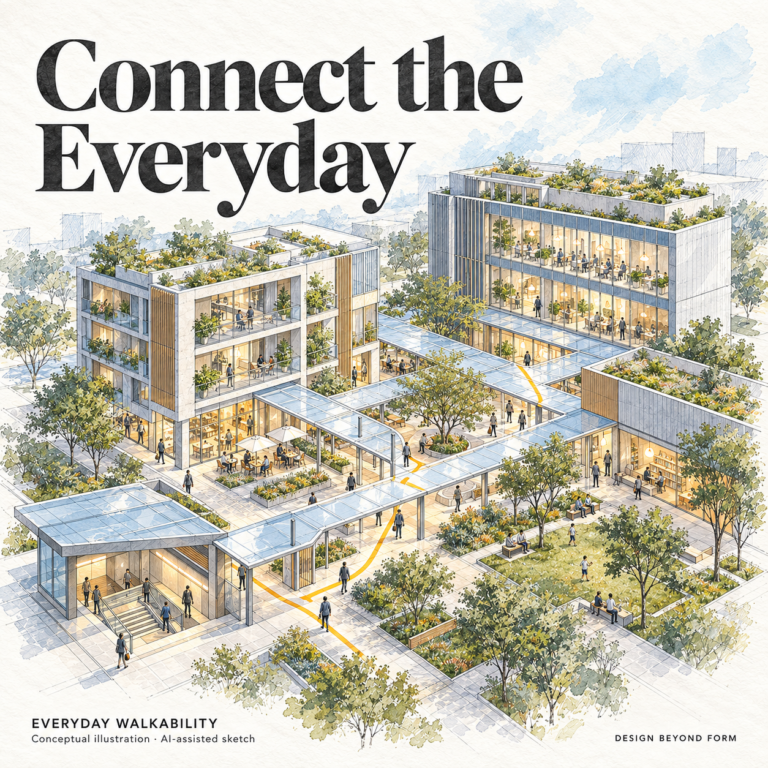
For me, that’s where Masari Walk begins.
Not as an object.
But as a layer.
A system of connections
that sits within the city.
Linking stations.
Linking neighborhoods.
Not just for movement—
but for life.
Shops.
Cafés.
Small interactions.
Even parks—woven into everyday paths.
And once that happens,
something shifts.
You don’t remove cars.
You simply stop needing them
as much as before.
Traffic doesn’t disappear.
But pressure reduces.
Choice increases.
And the city—
starts to breathe again.
That’s the shift.
From fighting traffic—
to designing beyond it.
Related Articles
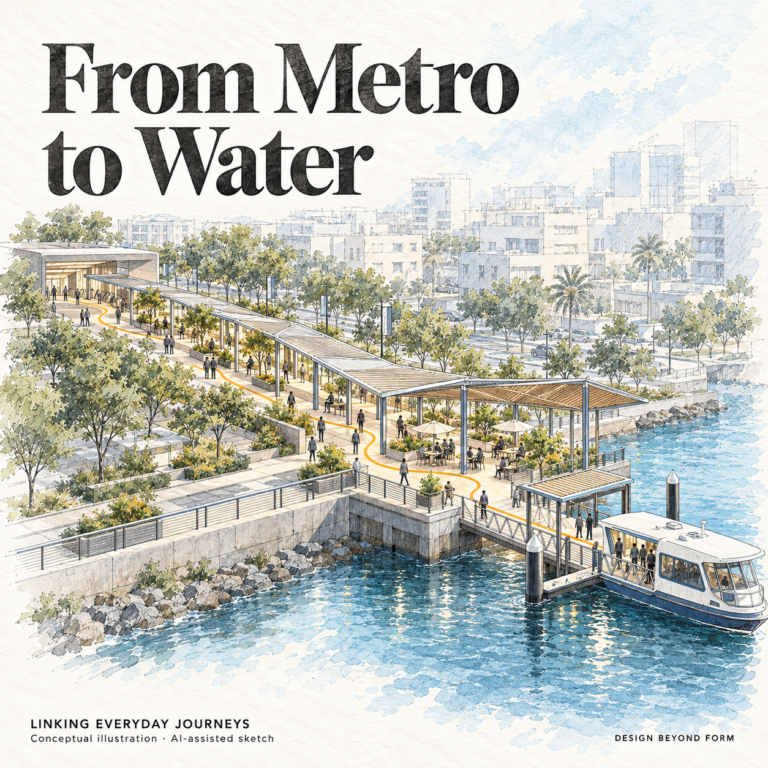
World Trade Centre to Pearl – Ferry : Masari Walk
A shaded DWTC-to-ferry connection shows how Masari Walk could address congestion.
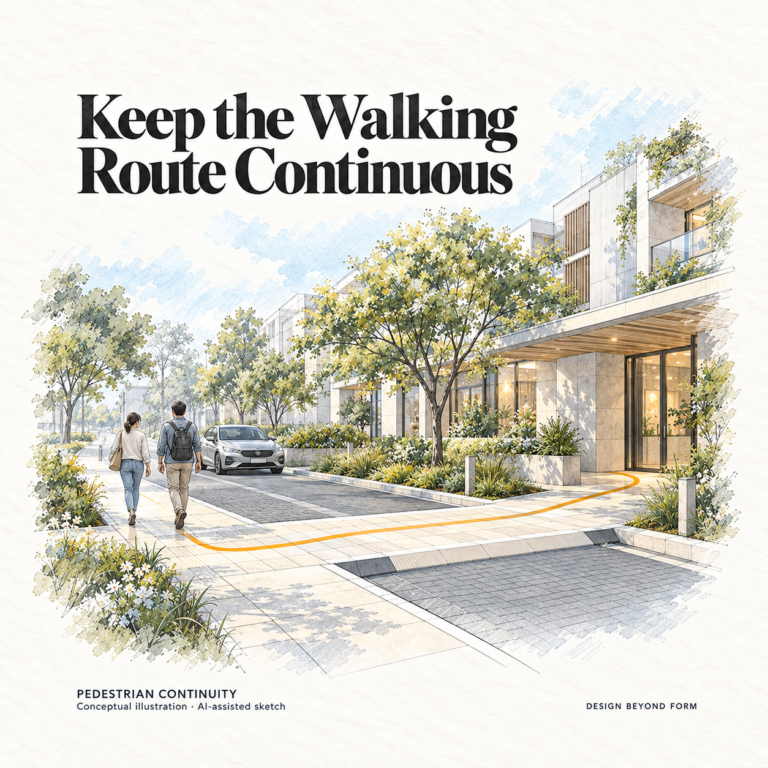
Pedestrian Crosswalks – Walk Friendly Life Is?
How conflicts with vehicles make everyday walking stressful, unsafe, and less inviting.
Dubai Doesn’t Need a 93 km Walkway. It Needs a Connected Walking Network.
Why continuous connections between familiar places matter more than an impressive walkway length.