
In General Gordon Square in Woolwich, London, researchers noticed something curious. People were sitting on the back of a granite bench, even though there was a seat right below them.
The top of the back was about 30 centimetres wide. It doubled as the edge of a planter. From up there, people could see more of the square, keep their feet out of the way of passers-by and talk more easily with someone who was standing. Friends didn’t all have to sit down to stay in the conversation.
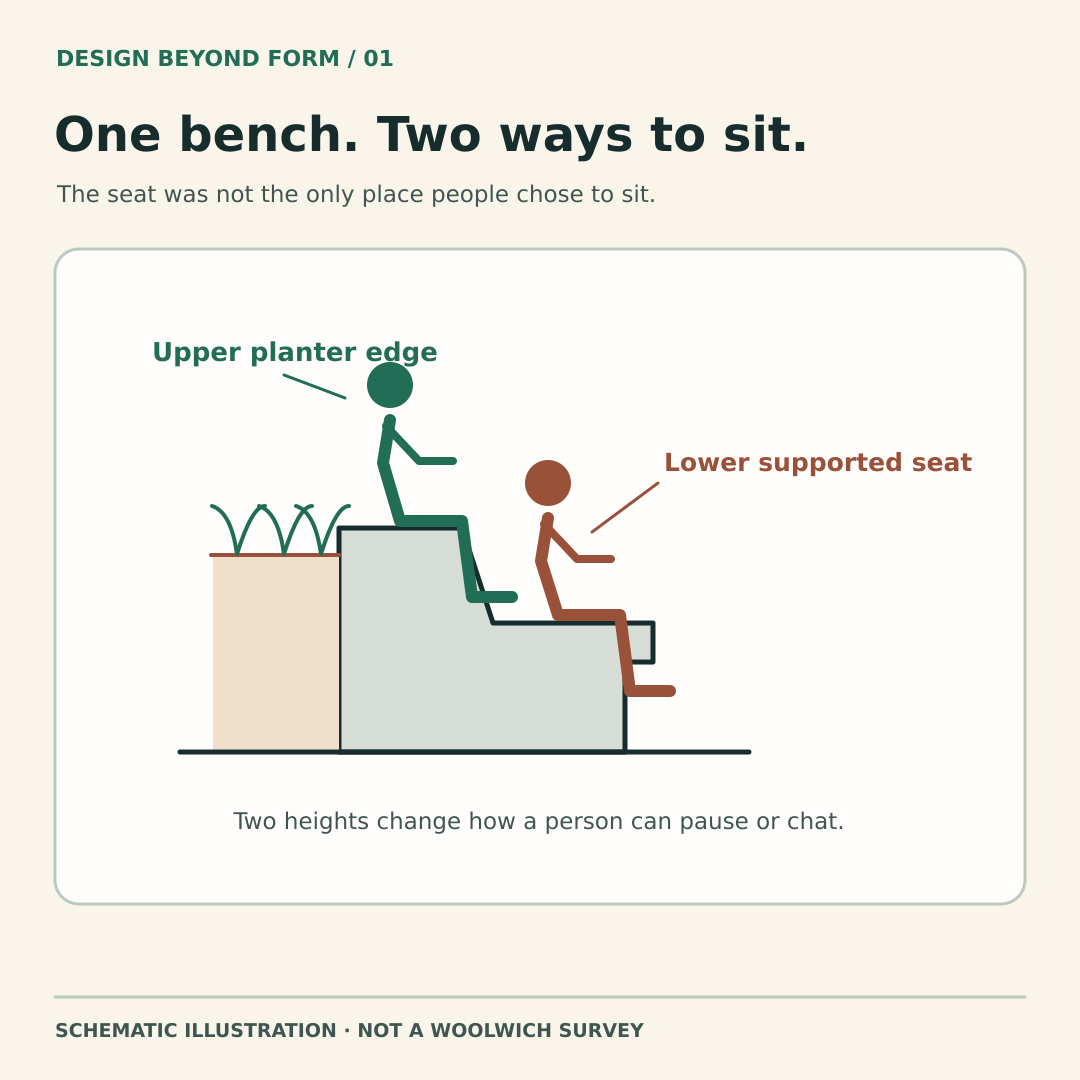
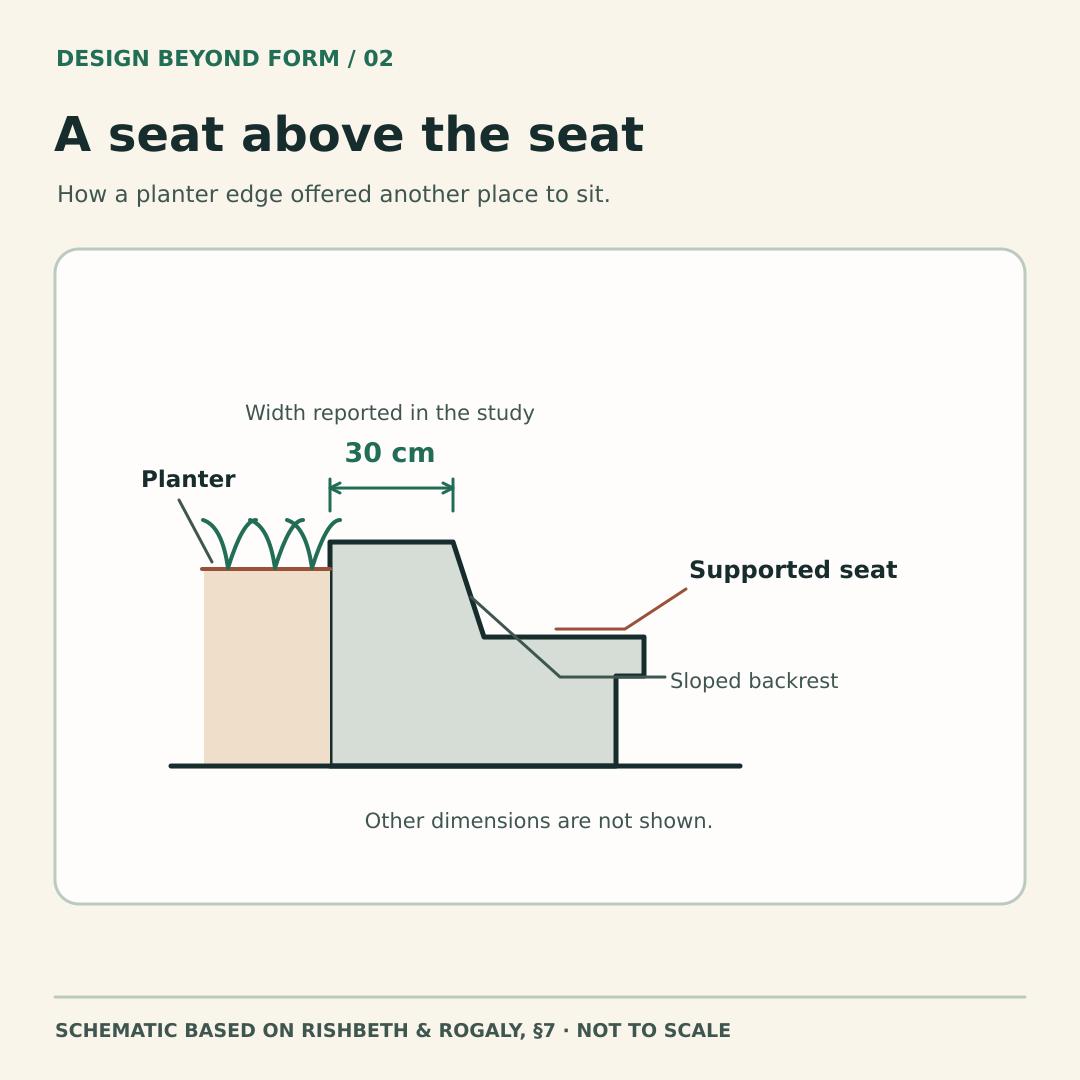
On a drawing, I might have counted one bench. But the people using it found two ways to sit, and each changed how they could spend time with others.
Clare Rishbeth and Ben Rogaly observed the square in 2015, using fieldwork, interviews and filmmaking. Their study, published in the June 2018 journal issue, also describes people choosing to sit away from others when they felt uncomfortable. It tells us how people used this square at the time. It doesn’t tell us that putting the same bench somewhere else would bring people together.
Draw the space beside the seat
If I were reviewing seating beside a busy entrance, I’d draw three people before counting benches: someone seated, a friend who has stopped to chat, and someone who needs to pass. Can the friend stand beside the seat without getting in the way? Is there room for a wheelchair user to join the group instead of having to stay in the path?
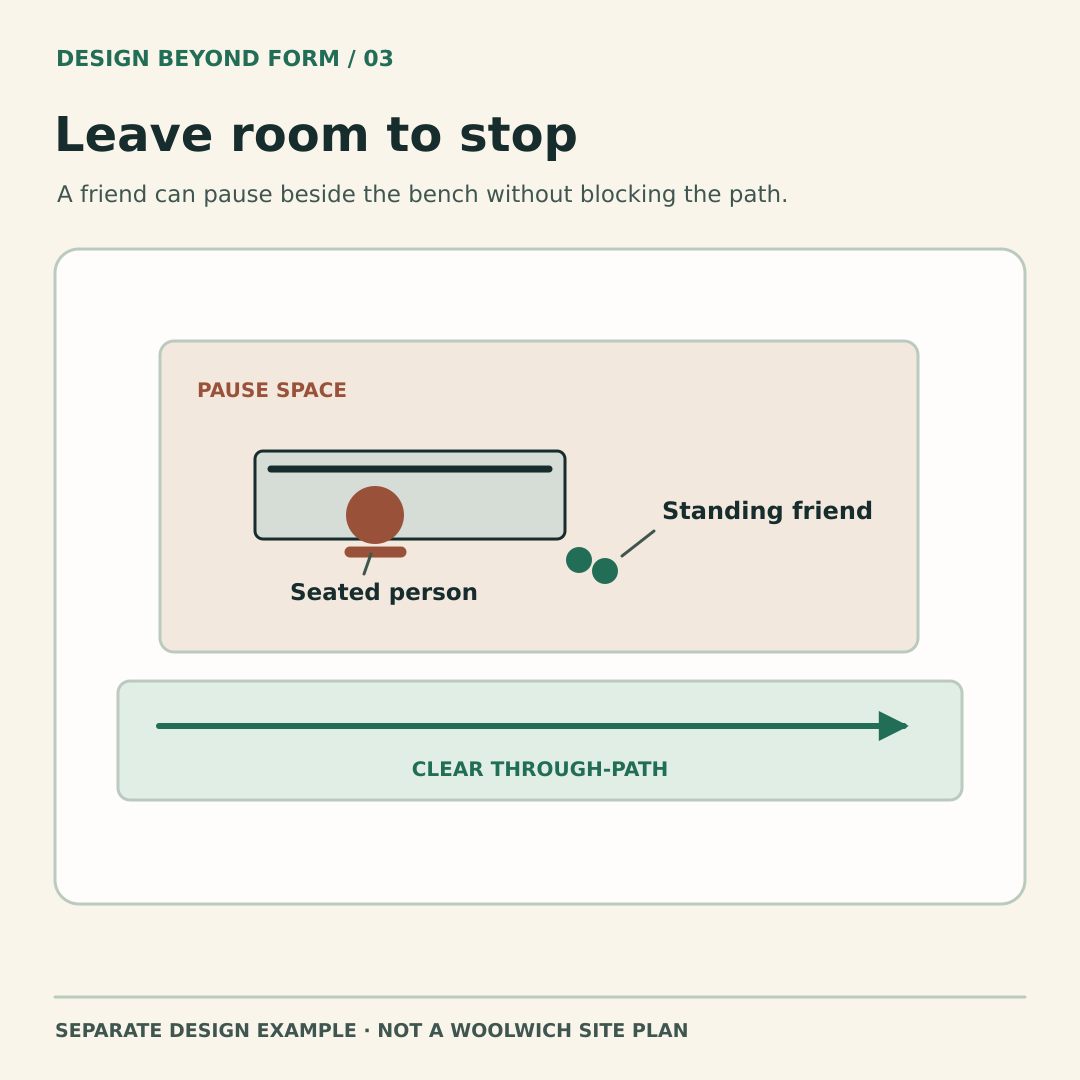
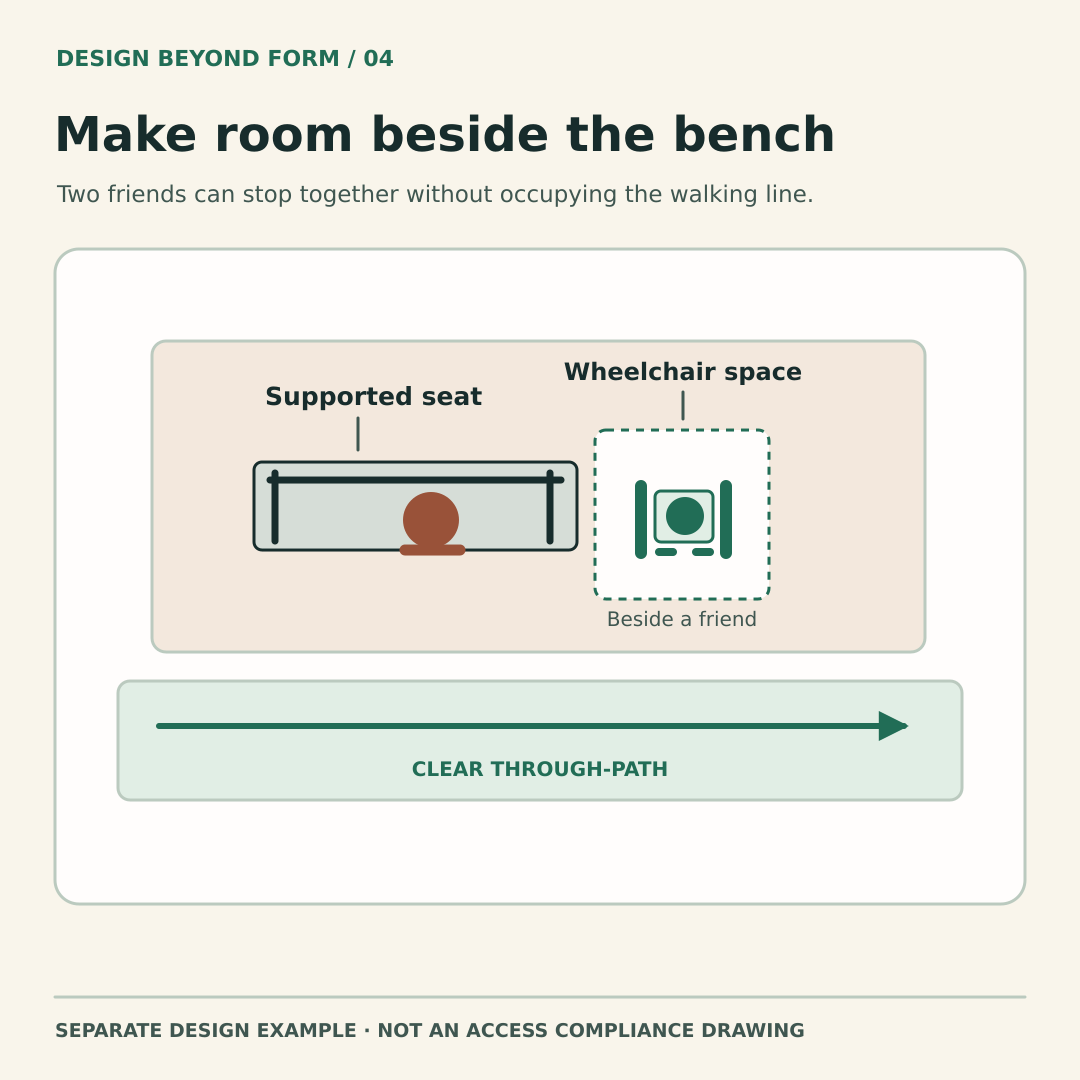
I wouldn’t make every seat a perch. Someone who needs a backrest or armrests may not be able to use that edge at all. I’d offer a supported seat as well, and a quieter place for someone who wants to watch the activity without being in the middle of it.
That’s where Design Beyond Form matters to me. A bench might look good and satisfy the brief. I’d also want to know what happens when someone sees a friend, stops for a minute, and decides to stay. Have we left enough room for that?
Related reading: A Metro Station Is Nearby. But Is It Easy to Walk There?