
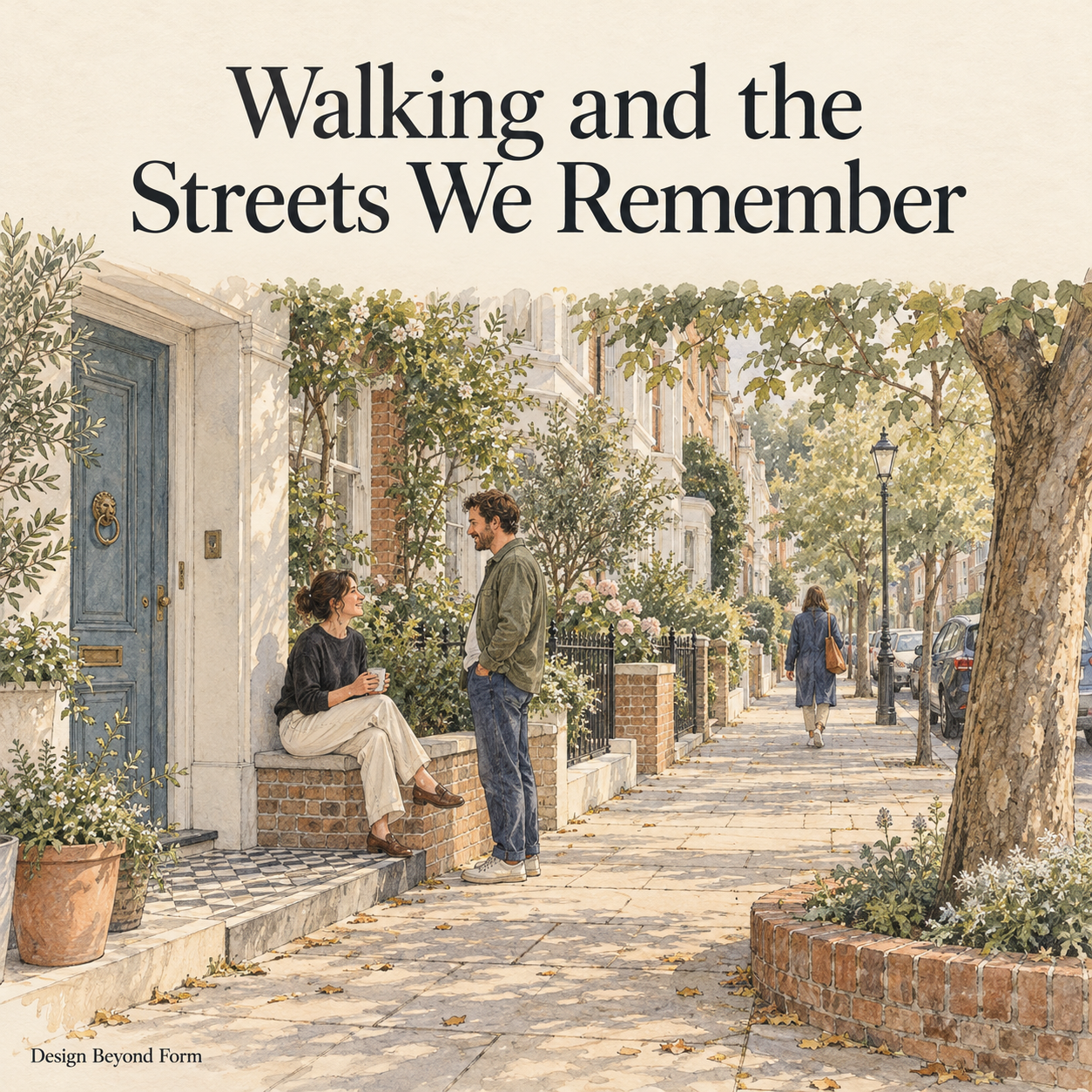
On a San Francisco street, children remembered the brickwork around a tree. On a nearby street with heavier traffic, residents recalled their surroundings largely as a corridor filled with cars.
These observations appear in Donald Appleyard and Mark Lintell’s 1971 study, Environmental Quality of City Streets: The Residents’ Viewpoint. The researchers interviewed twelve residents on each of three residential blocks with different traffic levels. They asked about local relationships and invited residents to draw their streets.
The quietest block, labelled Light Street, had more reported local friendships and richer recollections of its surroundings. On Heavy Street, social contacts were fewer, especially across the road, and traffic dominated the remembered scene.
This was a small, observational study. Light Street residents had lived there for an average of 16.3 years, compared with eight on Heavy Street; household composition and building details also differed. It cannot establish that walking, or traffic alone, caused the differences. It does invite an architectural question: what does a street allow people to experience?
Room to notice
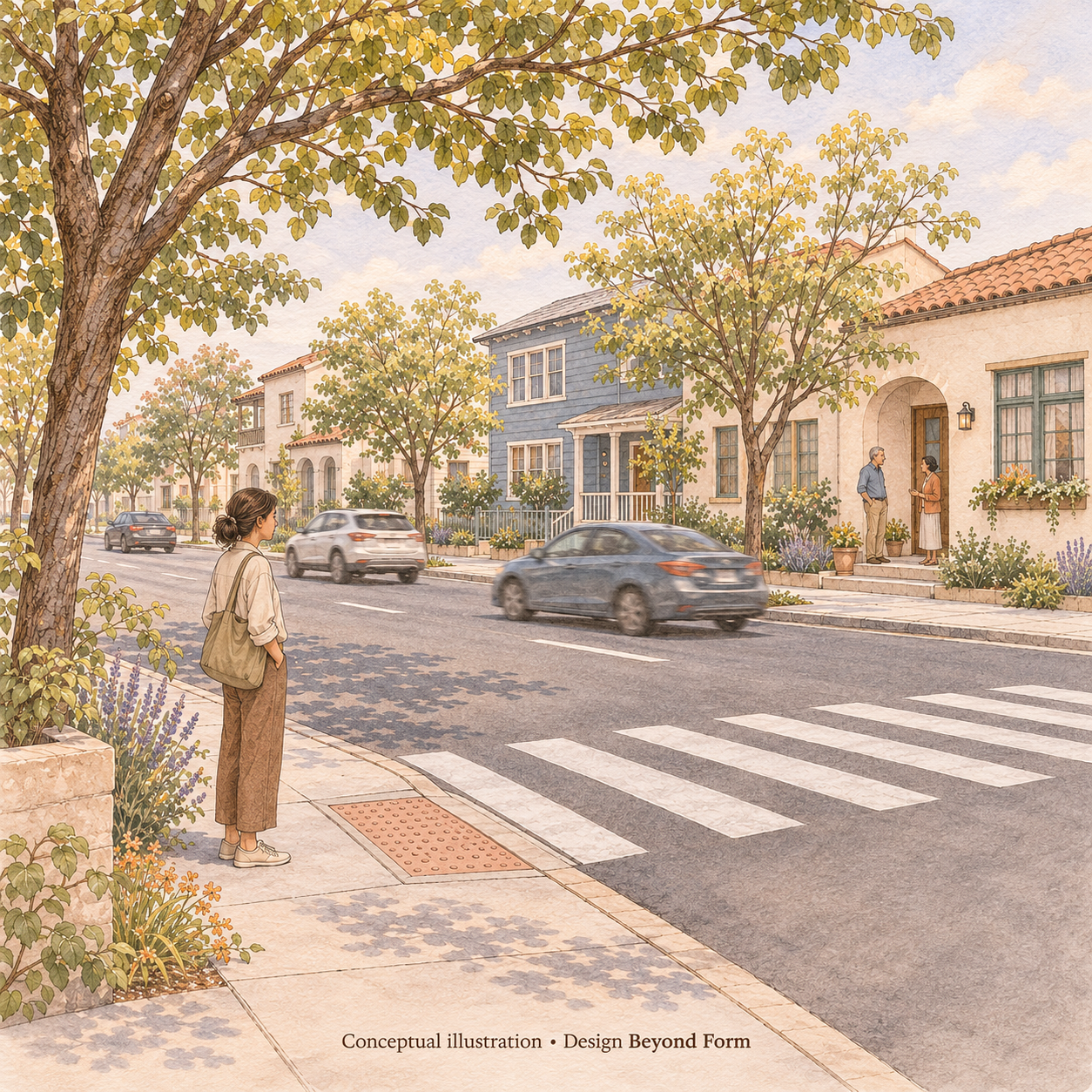
A pavement can provide a route without offering a comfortable place to be. If crossing requires constant vigilance, or a conversation must compete with traffic noise, attention is pulled towards getting through. The details that make a place particular may receive less of it.
For architects, this suggests that the experience of walking deserves consideration alongside the appearance of buildings. A street elevation shows the composition of façades. It says much less about whether someone can stop outside a doorway without blocking others, wait in shelter or comfortably reach the opposite side.
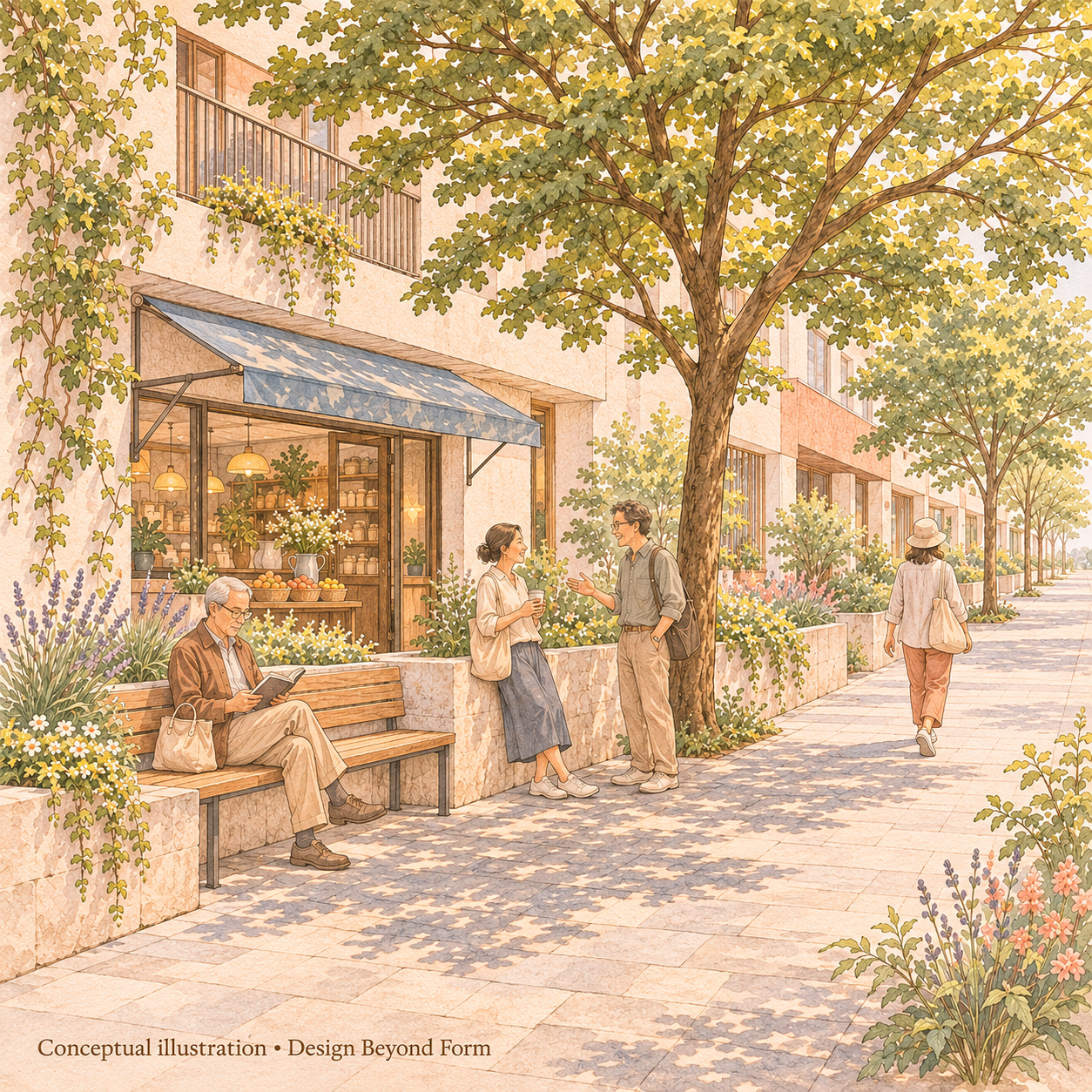
These are design questions at the boundary between architecture and public space. An entrance, a seating edge or a sheltered threshold can offer somewhere to pause. Their usefulness depends on the street around them: how people arrive, how much room they have and whether lingering feels welcome. The same consideration must extend to people using wheelchairs or other mobility aids.

How familiarity becomes attachment
Memory gives those everyday encounters a longer life. A familiar corner can acquire meaning through the people met there. The tree passed each morning becomes part of a personal route through the neighbourhood.
Read this way, Appleyard and Lintell’s drawings offer an invitation to look beyond the street as an arrangement of objects. They make room for another architectural concern: the relationship between a place and the people who spend time in it.
A place’s soul can be understood as this accumulated attachment. It belongs partly to its buildings, but also to the ordinary experiences that make those buildings familiar. No drawing can prescribe belonging. Design can, however, take seriously the conditions in which it might grow.
That calls for evaluating a street from the position of someone using it, at an unhurried pace, rather than only from the perspective of a plan or a photograph. Where is it comfortable to pause? What makes returning feel familiar?
A street becomes part of daily life through use. Architecture’s contribution is to give that life room.
Source: Donald Appleyard and Mark Lintell, Environmental Quality of City Streets: The Residents’ Viewpoint, Highway Research Record 356 (1971), pp. 69–84. Original research
Related Picks
As an Amazon Associate I earn from qualifying purchases.

Design Beyond Form by Chris Woohyun Cho — View on Amazon (paid link)
A closer look at architecture shaped by people, place and everyday life—through the questions and experiences behind the design.
Further Reading
Livable Streets 2.0 — Bruce Appleyard
Publisher information · paperback · ISBN 9780128160282 · non-affiliate
Bruce Appleyard revisits the relationship between traffic, residents and street life. This later book extends the discussion; it should not be confused with the original research discussed in the article.
Related Articles
The Shops Are Close. Why Does the Walk Still Feel Difficult?