
Imagine someone preparing to walk to the neighbourhood shops. The distance is short. The pavement is continuous, and there is a safe crossing. From a plan, the journey looks straightforward.
Yet they hesitate.
They are thinking about the return journey with shopping bags. If they become tired, where could they stop?
This is a hypothetical situation, but it raises a practical question. When architects describe a place as walkable, whose experience are they imagining? Someone who can move continuously, or someone who needs the freedom to pause?
The obvious response might be to add a bench. But before choosing its shape or material, there is another question to ask: what would someone actually use it for?
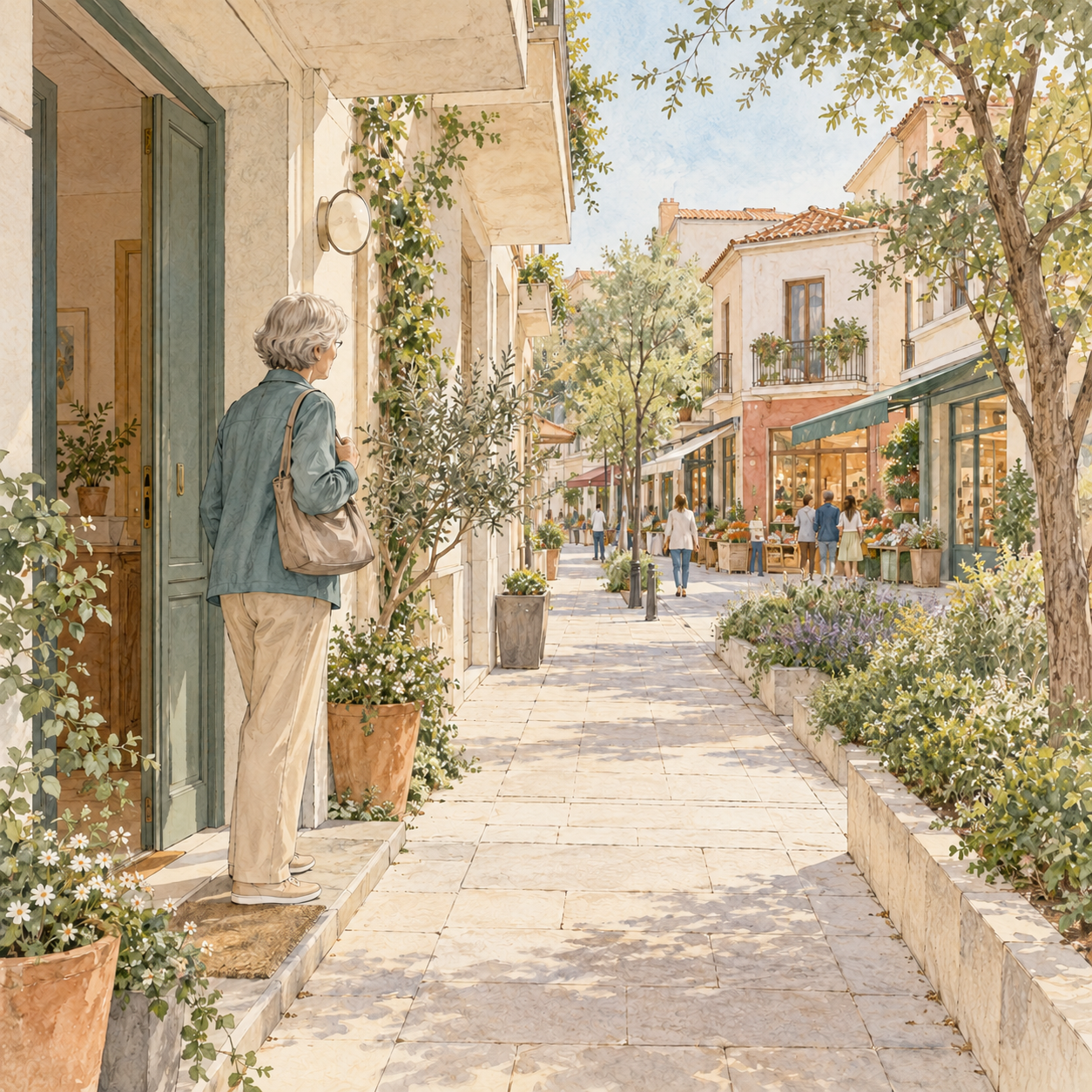
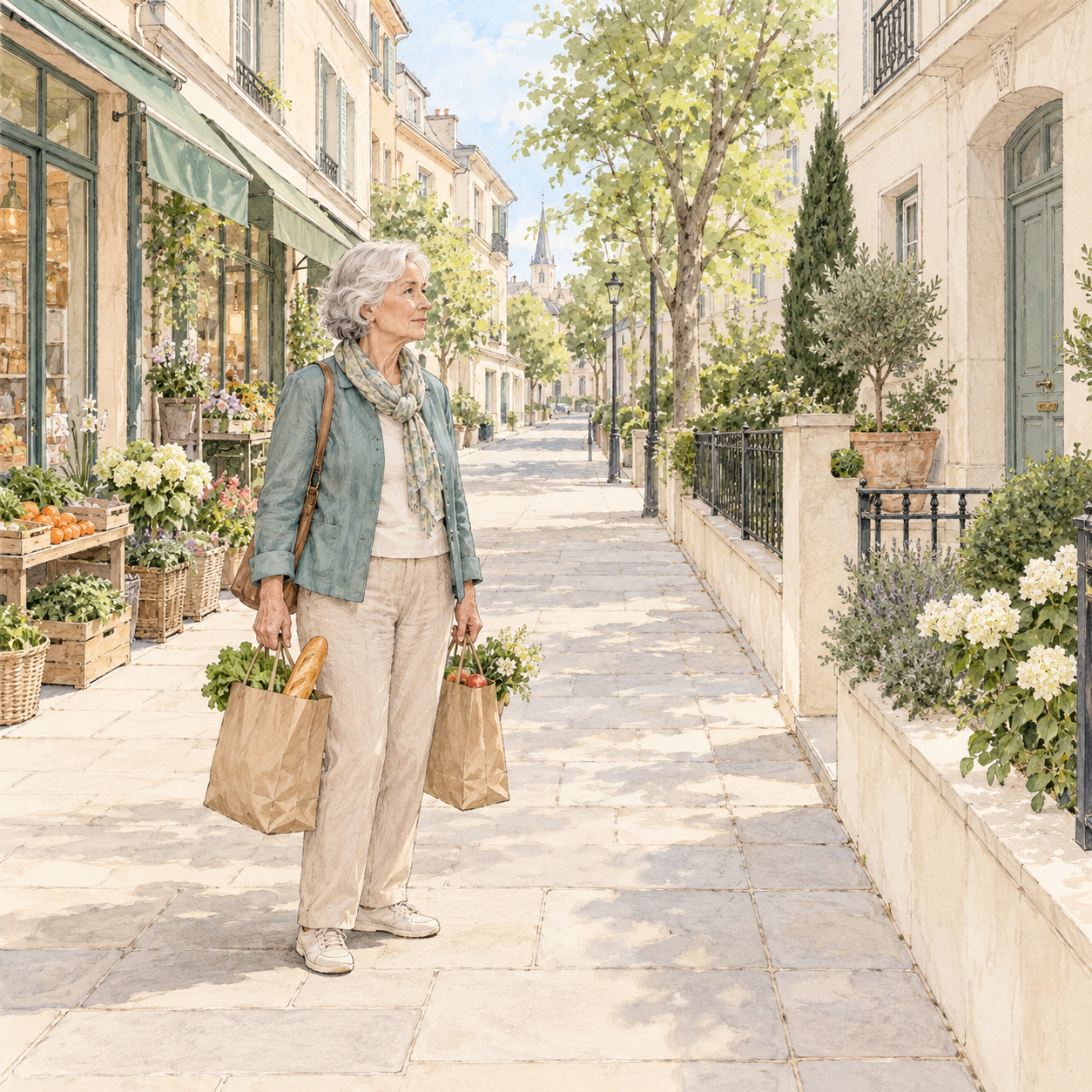
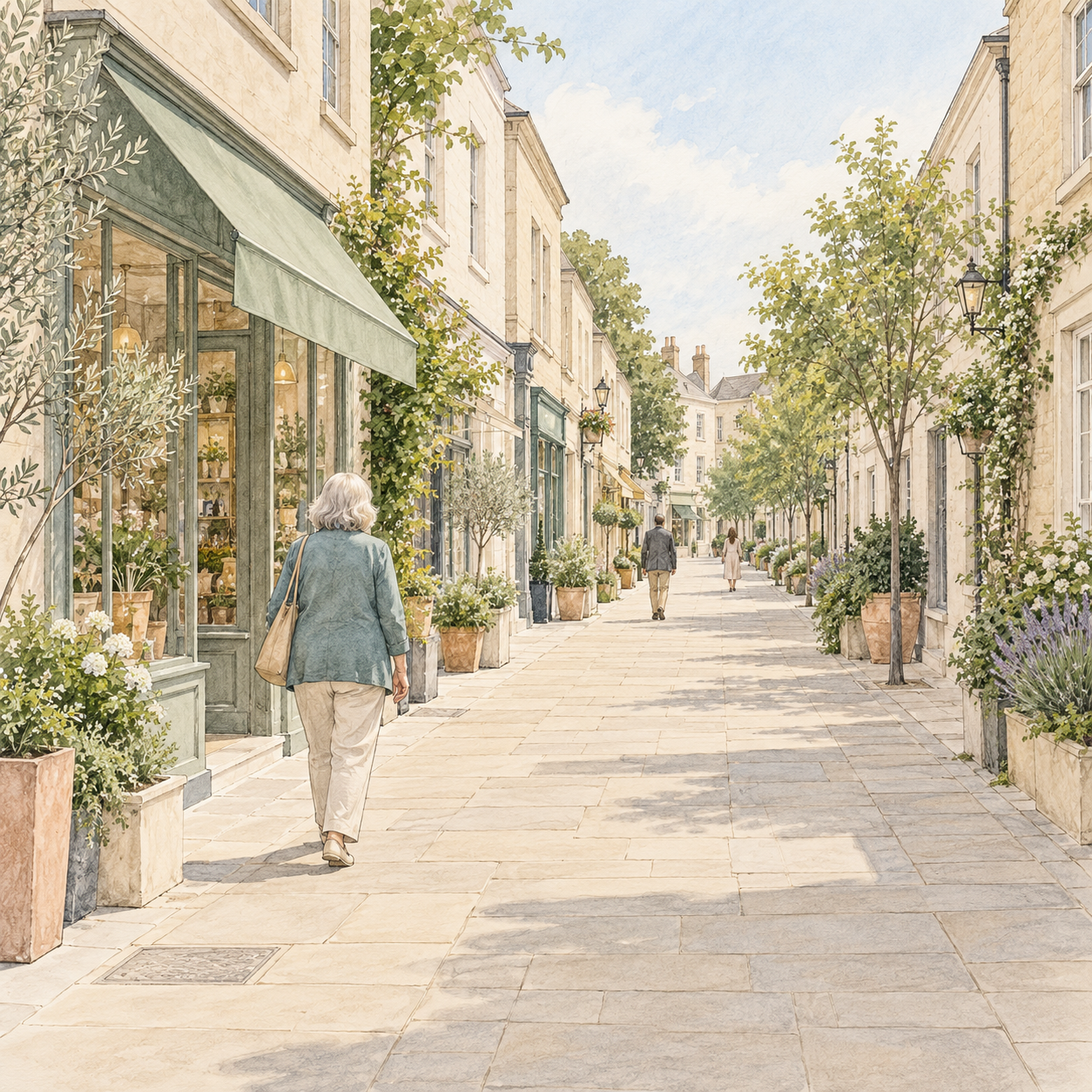
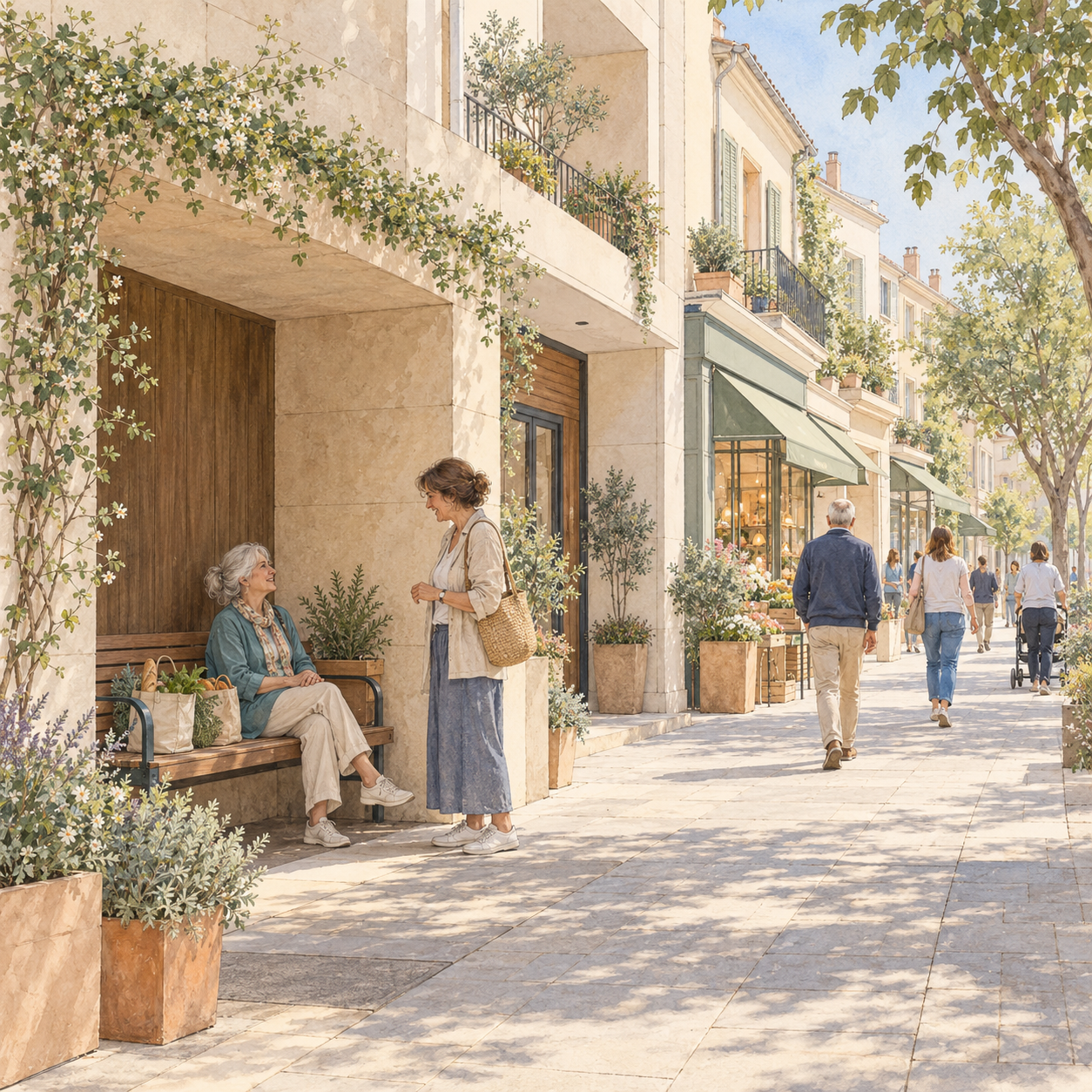
Research published in 2016 offers a useful starting point. In Vancouver, Callista Ottoni and colleagues interviewed 28 older adults in 2012 and returned to 22 of them in 2014. Participants described benches as supports for mobility, places to enjoy green and waterfront settings, and opportunities for social connection. Their accounts suggested that a seat could have a place in neighbourhood life beyond relieving tired legs. These were reported experiences, not experimental proof that benches create friendships. Read the study.
So should a successful bench make more people walk?
A Copenhagen study published in July 2019 complicates that assumption. Across 11 neighbourhood open spaces, bench numbers were not significantly associated with walking. Social interaction was negatively associated with walking, while interviews described the value of sitting and talking with neighbours. The researchers suggested that people often stopped to socialise. The study could not establish cause and effect. Read the full study.
That leaves architects with an interesting question. If someone stops walking to speak with a neighbour, has the space become less successful?
Counting movement alone would miss what happened during that pause.
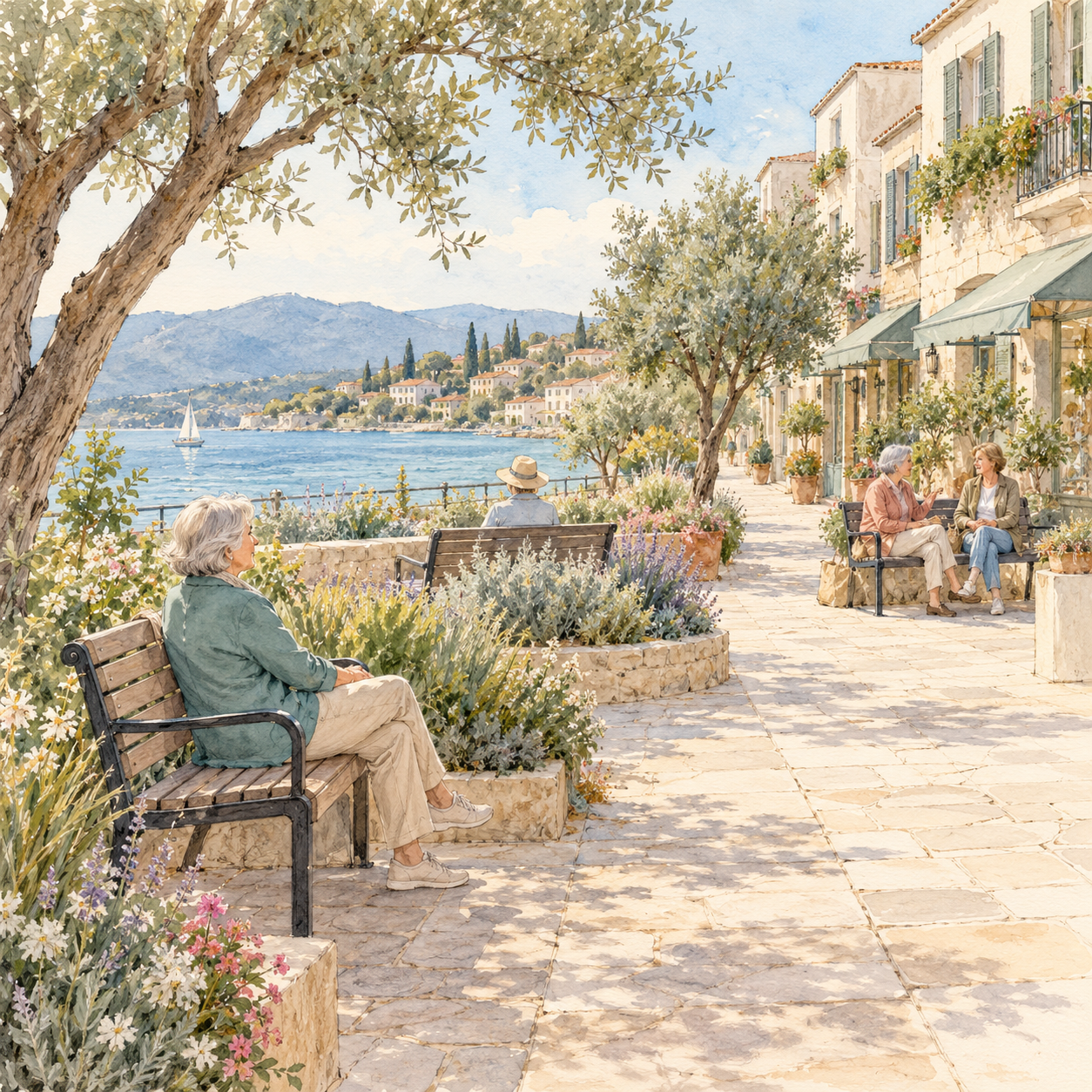
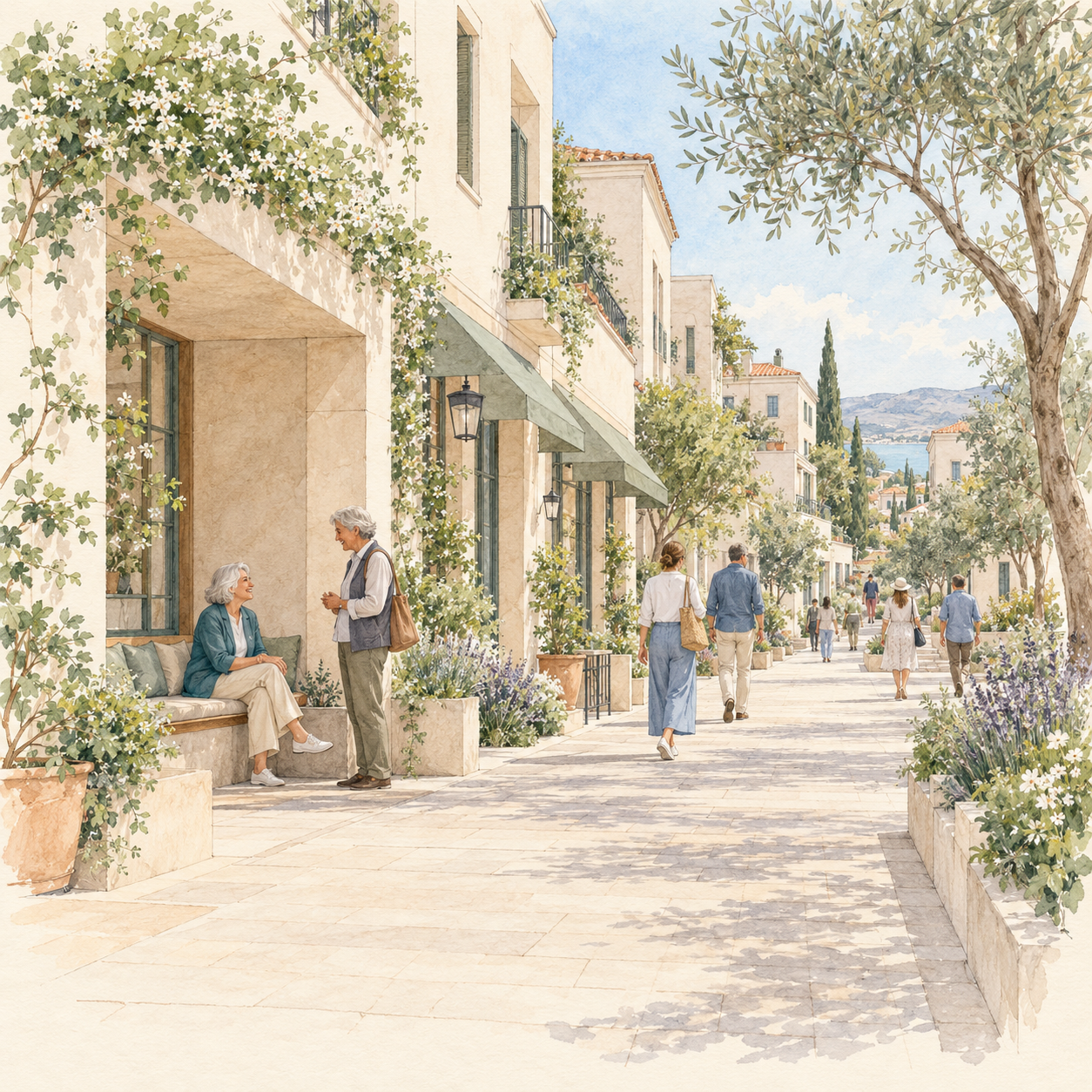
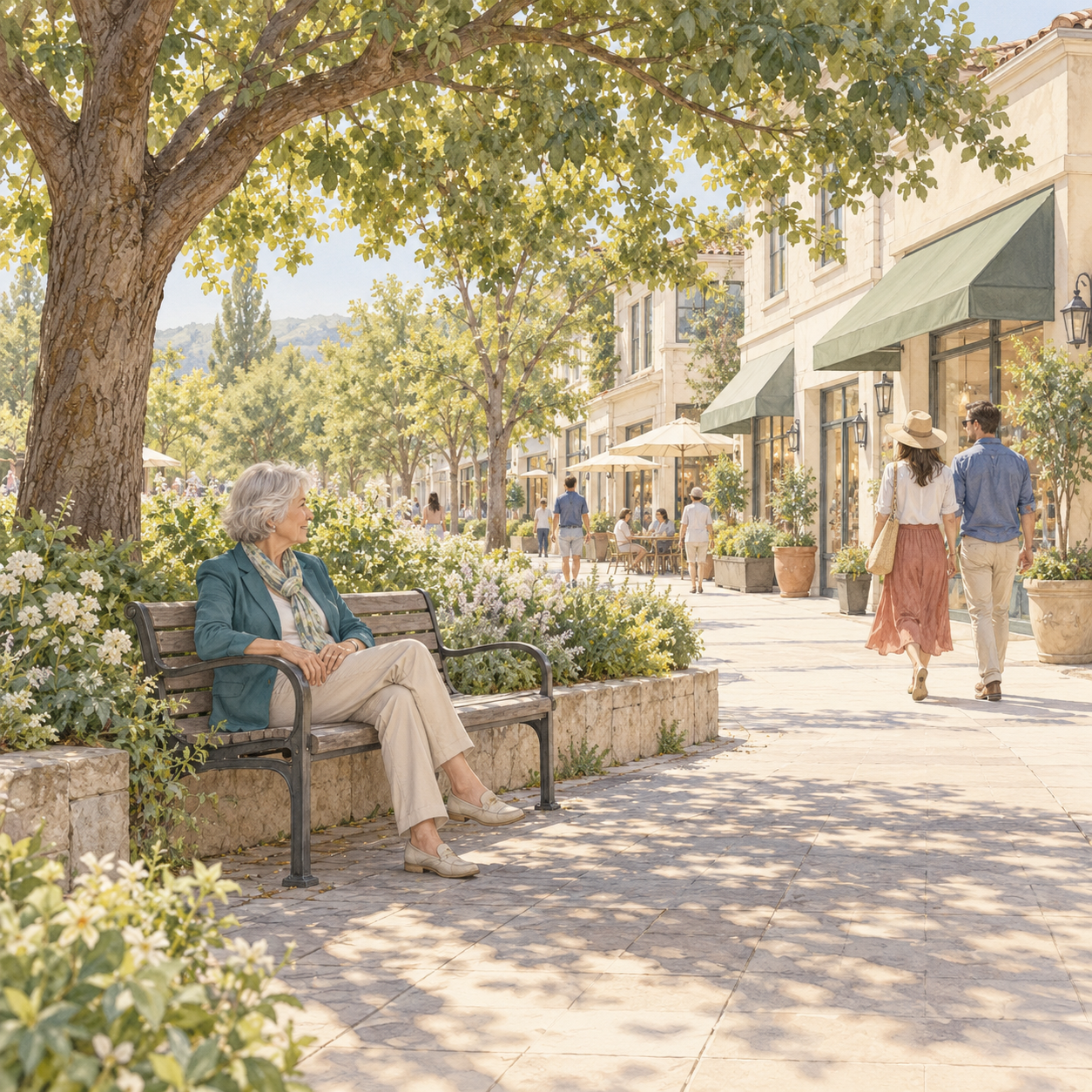
Now the design problem becomes more specific. Where should the seat face? Can someone reach it without stepping away from an accessible path? Is there back support? Can a wheelchair user remain beside a companion without blocking others? Is there shade when it is needed?
And does everyone want a conversation? Some people may prefer to watch quietly. A thoughtful arrangement should offer that choice too.
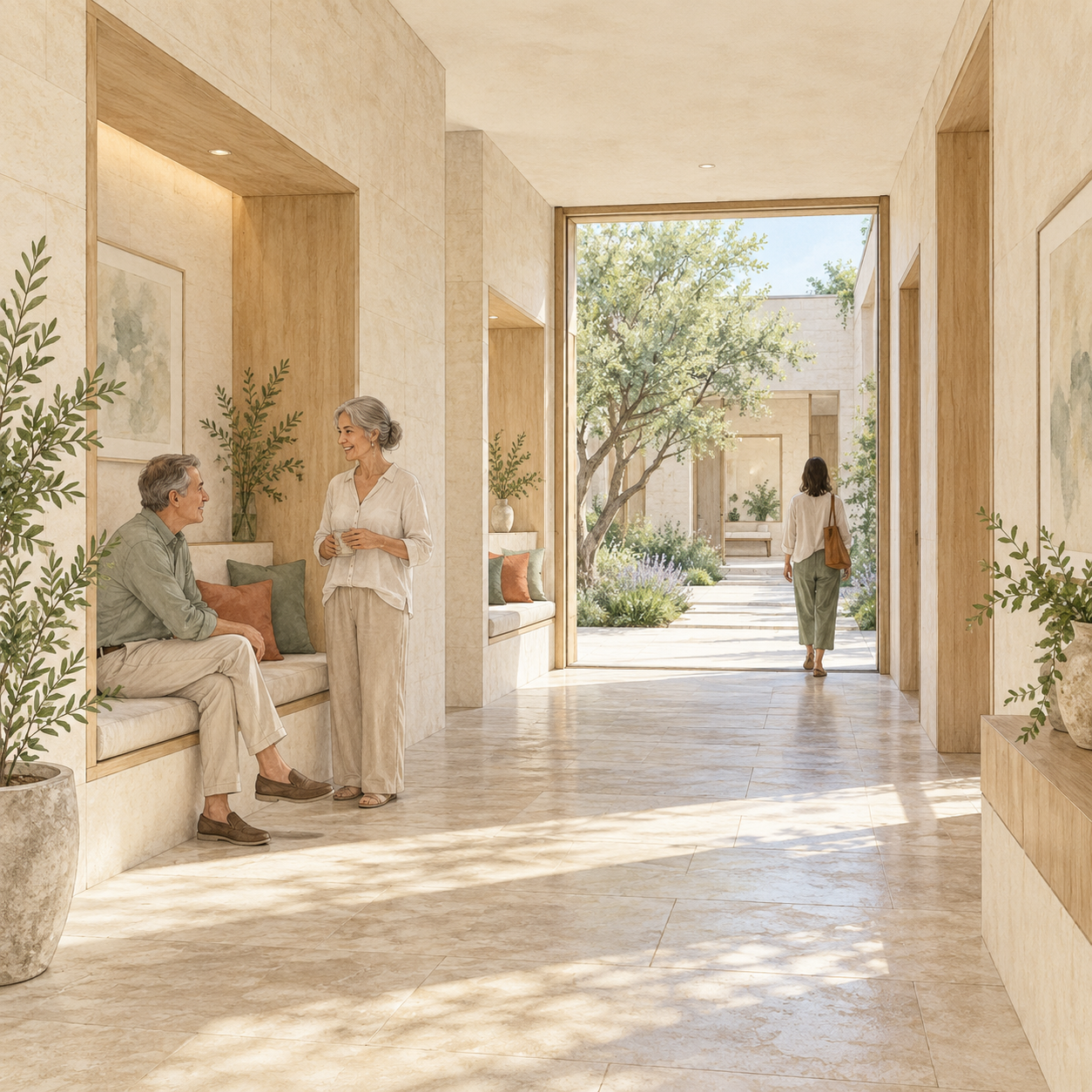
These questions apply beyond streets. A corridor in a residential building, the edge of a courtyard or a resting place inside a shopping centre can be considered in the same way. A seat placed where people naturally pass offers different possibilities from one hidden behind decorative planting. Neither position is always right. The decision depends on the life around it.
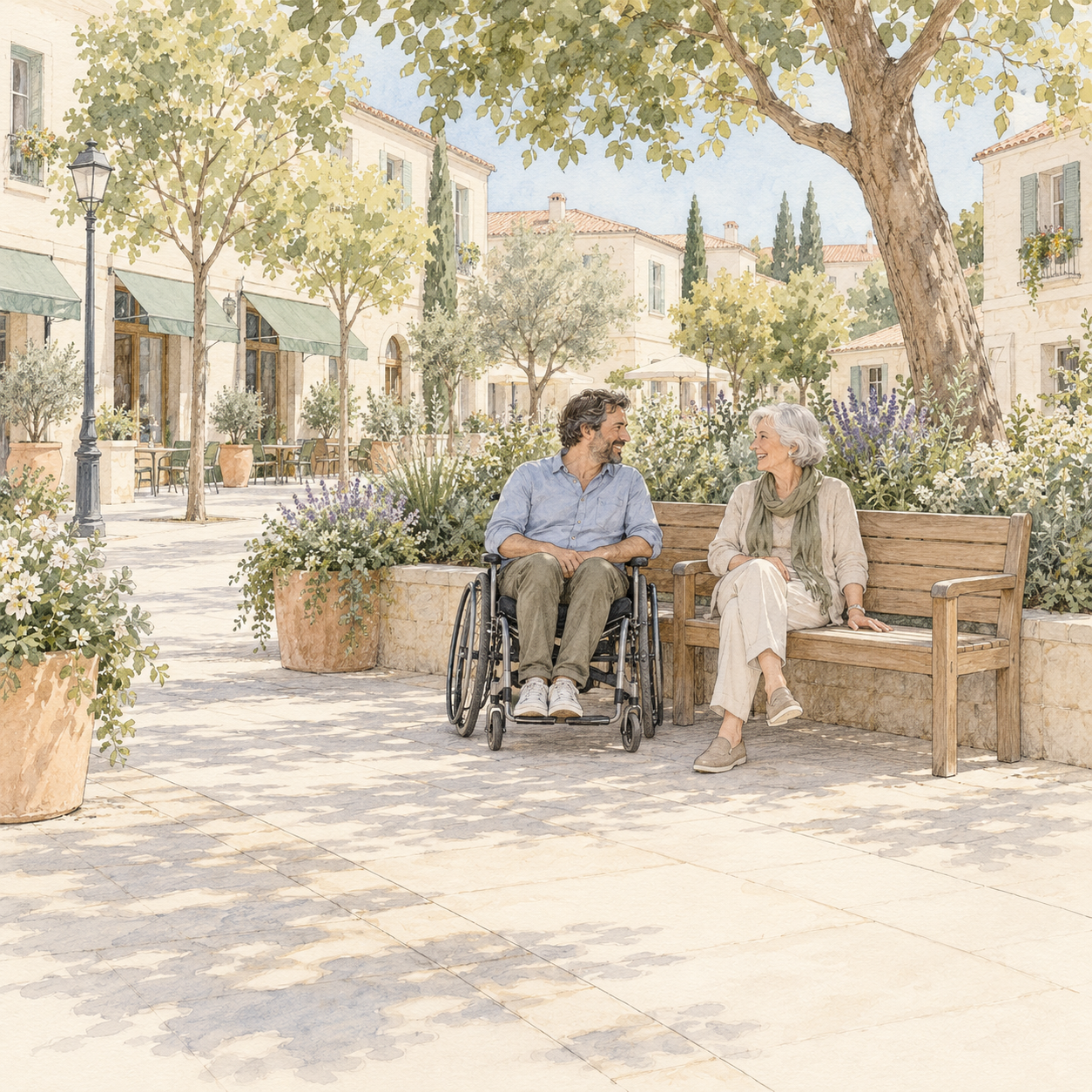
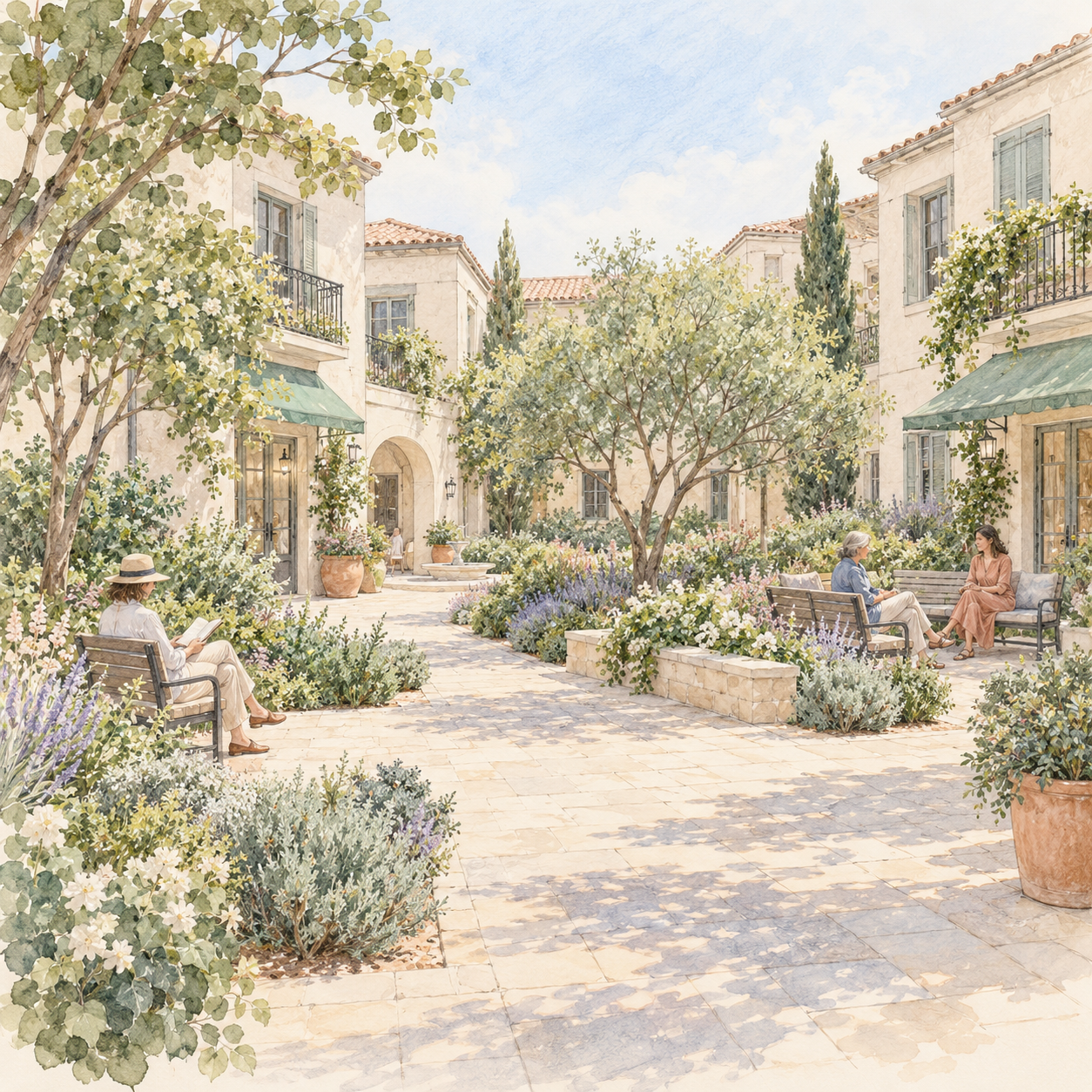
Nature can help: a tree may provide shade, while planting can soften a resting place without separating it completely from the route. But an attractive landscape alone does not explain whether people can use it comfortably.
This is where Design Beyond Form becomes important. The design begins with what people might experience, then asks how space can support it. Walking creates opportunities to notice others. A pause may allow a greeting to become a conversation. Over time, such experiences may become part of how someone remembers a place and feels they belong. Architecture can make room for this, although it cannot guarantee it.
Return to that person considering the shops. The distance has not changed. But what if there were somewhere comfortable to pause along the way?
What might become possible beyond simply reaching the destination?
Editorial note: this draws on published research from 2016 and 2019, not a new event. The opening is hypothetical; the architectural applications are interpretation.
Conceptual illustrations. These fictional scenes explain design possibilities; they do not depict the research sites or measured outcomes.
Related Picks
As an Amazon Associate I earn from qualifying purchases.

Design Beyond Form by Chris Woohyun Cho — View on Amazon (paid link)
A closer look at architecture shaped by people, place and everyday life—through the questions and experiences behind the design.
Cities for People — Jan Gehl
Hardcover · ISBN 9781597265737
Gehl’s examination of streets and public spaces is a useful companion to the question raised here: what makes an ordinary route comfortable and worth following, beyond simply making the destination close?
Related Articles
Dubai Doesn’t Need a 93 km Walkway. It Needs Walkable Communities.
Putting comfortable neighborhood routes and everyday destinations at the center of Dubai’s walkability.
Why Walking Might Be the Most Powerful Idea We Forgot — And How It Can Change Dubai
Explore how walking can support social connection and a more human experience of the city.