
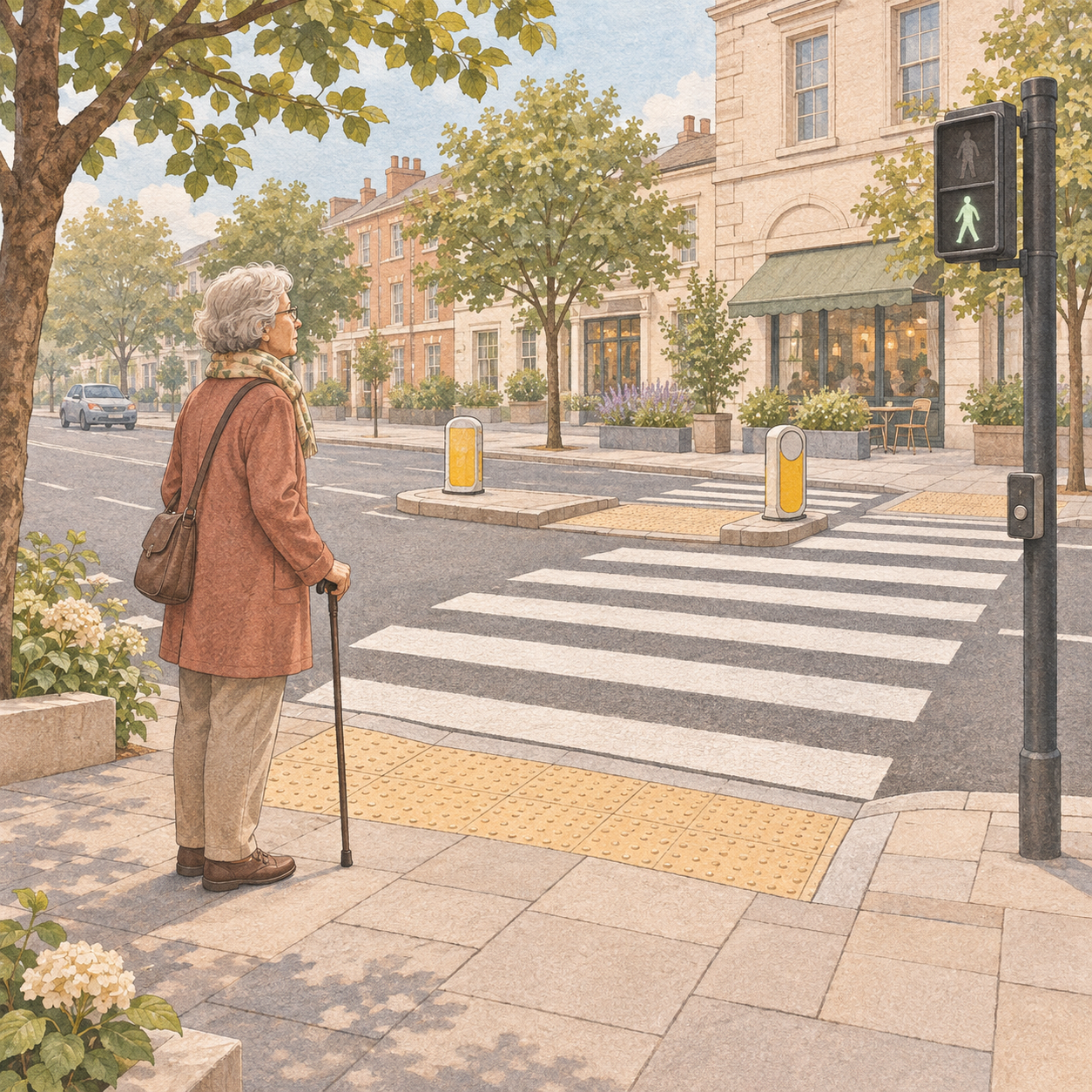
A pedestrian count records the people who arrive. It cannot, by itself, explain who has stopped coming.
That distinction matters when a city decides whether a crossing deserves improvement. A quiet pavement may suggest limited demand. It may also sit beside a road that some residents no longer feel able to cross. The same observation can support very different design decisions.
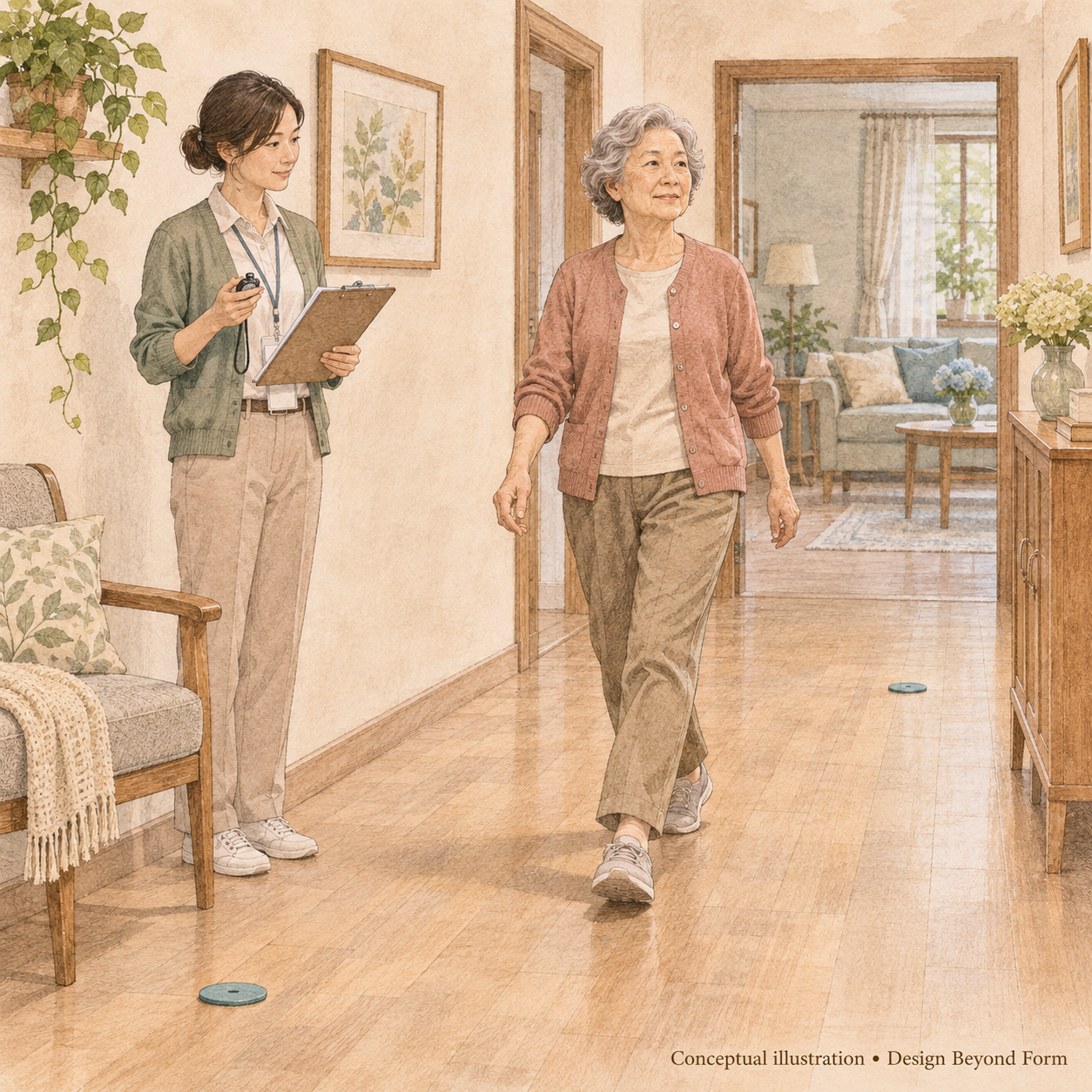
A useful starting point comes from a study published in Age and Ageing in 2012. Laura Asher and colleagues analysed Health Survey for England data from 2005, covering 3,145 adults aged 65 and over. Participants’ normal walking pace was assessed over eight feet. Mean speeds among those completing the test were 0.9 metres per second for men and 0.8 for women, below the 1.2 metres per second crossing-design assumption examined in the paper. Crucially, the sample came from private households rather than people already using a crossing. Original study
This was a short walking test, not an observation of people navigating traffic. It did not establish how many journeys a particular junction prevented, and its historical benchmark should not be presented as a description of every crossing today. Its architectural value lies in the question it raises: whose movement becomes visible in the evidence used to design a place?
The Department for Transport addresses that problem in Inclusive Mobility, published online in January 2022. Its crossing guidance warns that observed pedestrian flows underestimate demand when people avoid a location because they feel unsafe. It calls for engagement with local accessibility groups from the beginning of an assessment. Counting those present is therefore only part of understanding who needs to cross. Inclusive Mobility, section 4.10
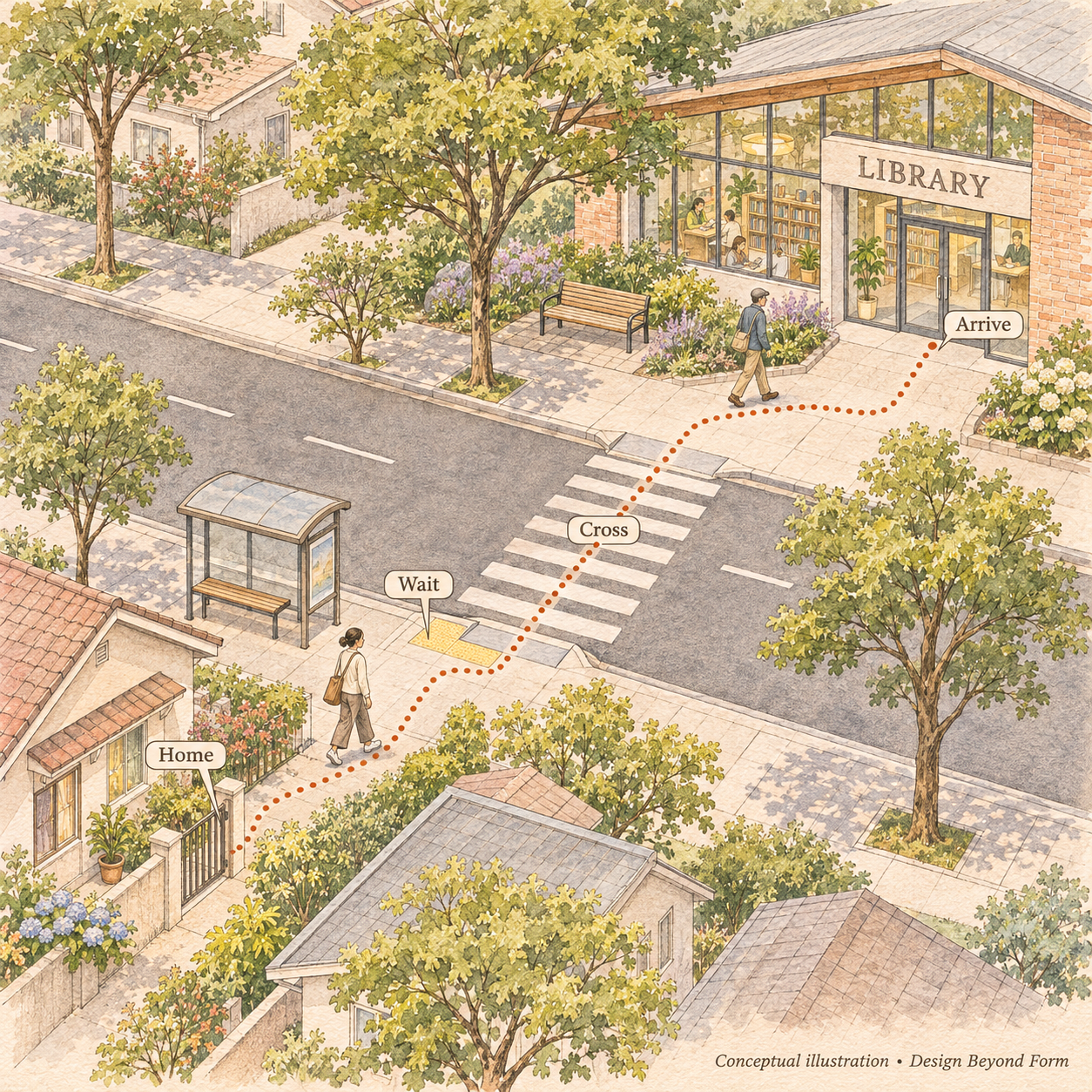
For architects, this suggests extending site analysis beyond the entrance and property line. A library can have a generous lobby and an accessible doorway while the route from nearby housing remains difficult. A shop can face the pavement yet be awkward to reach from the bus stop across the street. The building’s invitation begins before its door.
A more revealing drawing would trace an entire ordinary visit: leaving home, reaching the corner, finding the crossing, waiting, crossing, and continuing to the entrance. Beside the dimensions, the designer could record the decisions and uncertainties each stage introduces. Where must someone judge moving traffic? Where can a person wait without blocking others? Is the onward route apparent from the crossing’s end?
This also changes the questions asked during consultation. Instead of asking only how an existing route performs, a team could ask which nearby destinations people avoid, which journeys require accompaniment, and where a short trip becomes an unwelcome detour. These accounts would need checking against conditions on site. Their purpose is to reveal questions a pedestrian tally cannot answer.
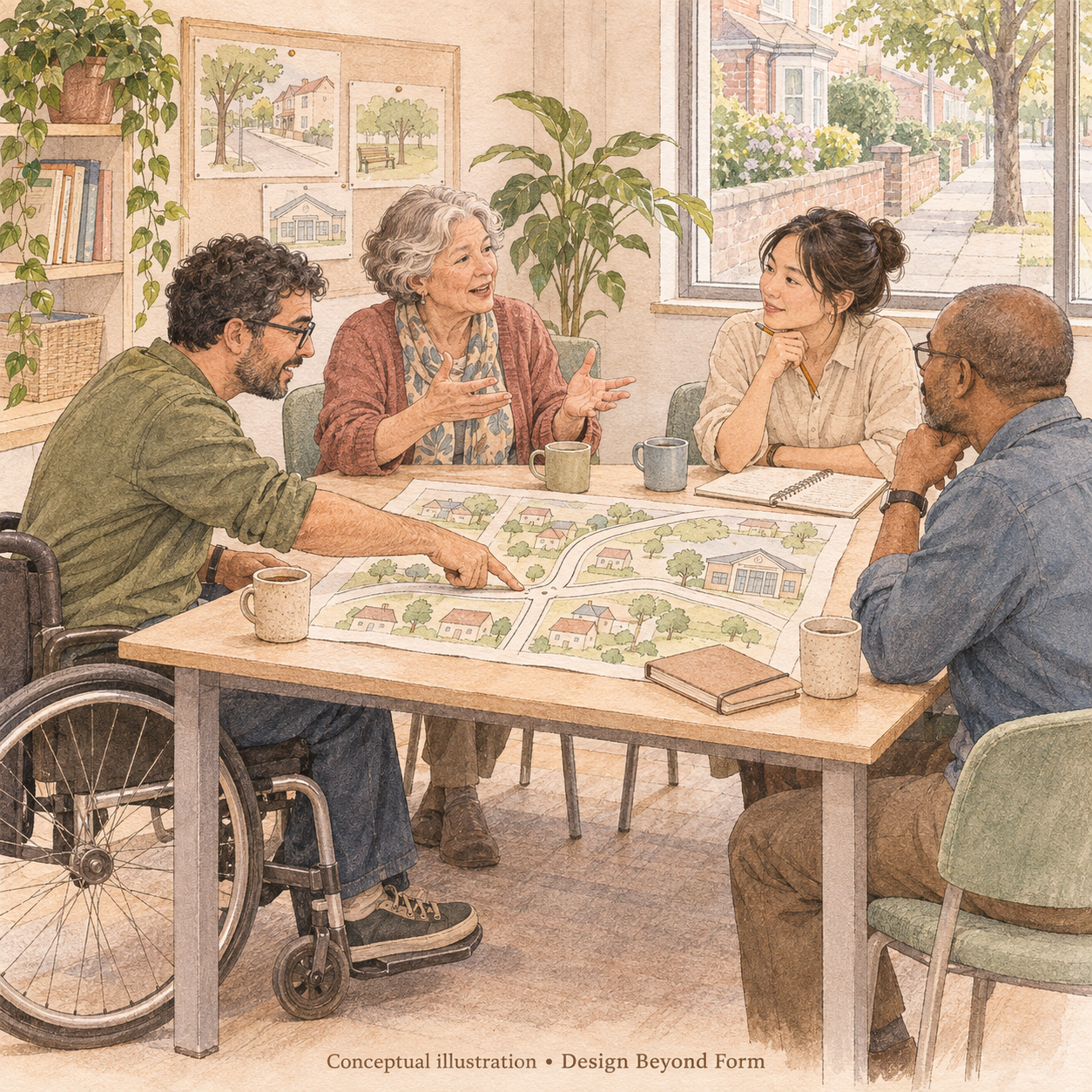
The proposal is not that every quiet street conceals a large unmet demand. That must be investigated. It is that low use should begin an inquiry rather than settle it.
For Design Beyond Form, walking is not simply movement counted on a pavement. It includes the confidence to leave home, continue a journey and reach other people. Architecture should make room for those possibilities, including for people missing from the original count.
Source note: the study uses 2005 data; the government guidance is dated December 2021 and was published online on 10 January 2022. The architectural applications above are interpretation, not measured outcomes.
Related Picks
As an Amazon Associate I earn from qualifying purchases.

Design Beyond Form by Chris Woohyun Cho — View on Amazon (paid link)
A closer look at architecture shaped by people, place and everyday life—through the questions and experiences behind the design.
Further Reading
Inclusive Mobility — Department for Transport
Free official guidance · published January 2022 · non-affiliate
This guide examines access to pedestrian and transport infrastructure. It provides practical questions for looking beyond pedestrian totals to the barriers that affect whether someone can make a journey at all. It is UK guidance, not Dubai compliance advice.
Related Articles
The Shops Are Close. Why Does the Walk Still Feel Difficult?