
Reading the latest reports about Hong Kong’s small homes brings me back to my own 600 sq ft apartment there. Now I live in roughly twice the space for half the cost. I find it hard to imagine going back.
On 3 October 2026, the South China Morning Post reported around 73,800 early-bird registration applications for a three-year grace period under Hong Kong’s new housing regime, with 42 subdivided flats certified compliant. Applications are a step towards meeting standards; they are not completed improvements.
These subdivided units are different from purpose-built nano apartments and from my former home. I do not equate my experience with those conditions. But the news brings me back to a concern I have as an architect: being able to live somewhere is not the same as having the freedom to enjoy living there.
What does the remaining space allow?
Affordability is real. Residents cannot simply choose more space because an architect recommends it. Yet fitting a bed, table and sofa into a plan does not tell us whether someone can feel at ease there.
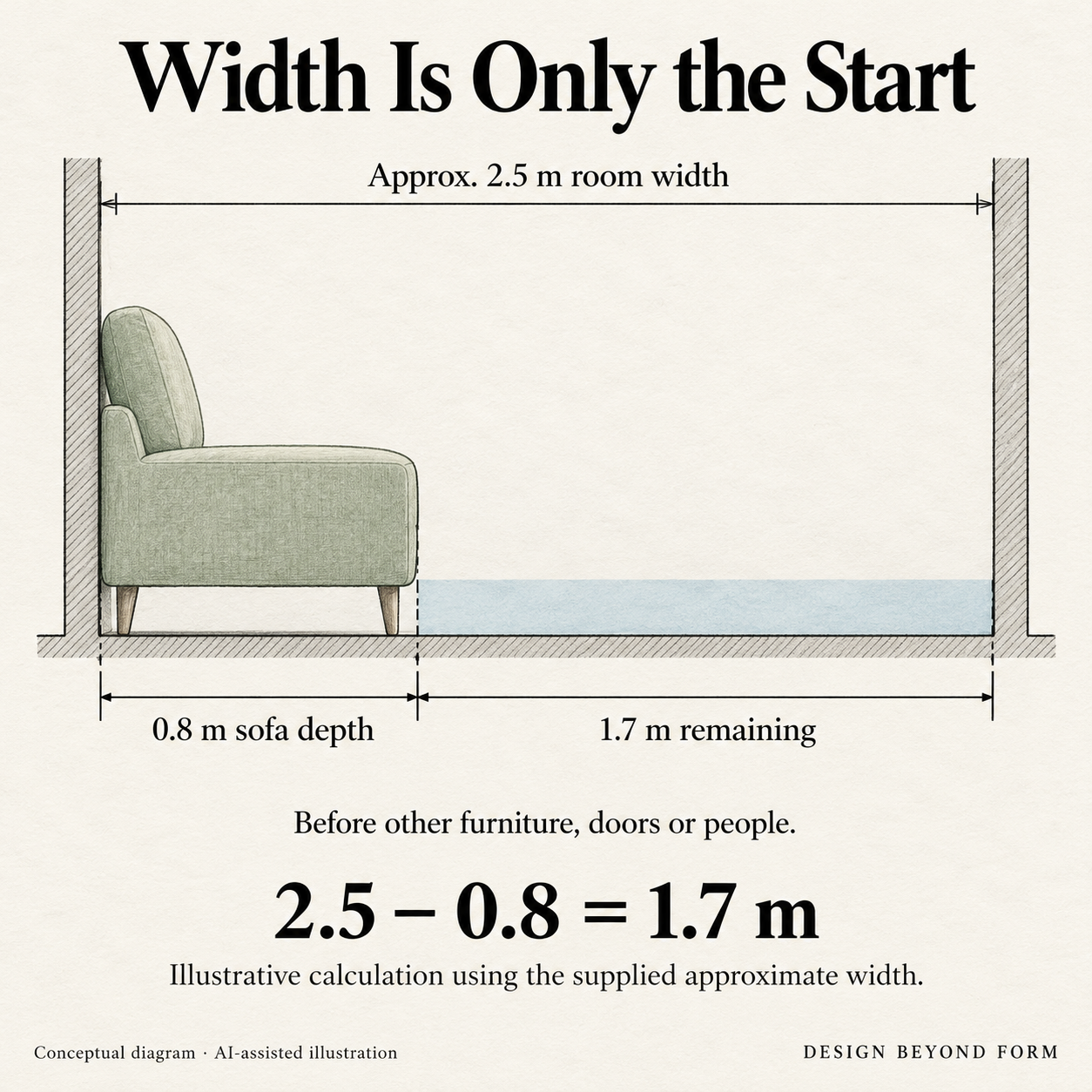
Consider an illustrative room width of 2.5 metres. Subtract a sofa depth of 0.8 metres and 1.7 metres remains. That remainder still has to accommodate other furniture, movement and people.
This calculation is not a measured dimension or total-area calculation for the separate apartment example below. The illustration is based on a real Hong Kong apartment under 400 sq ft, supplied by the author.
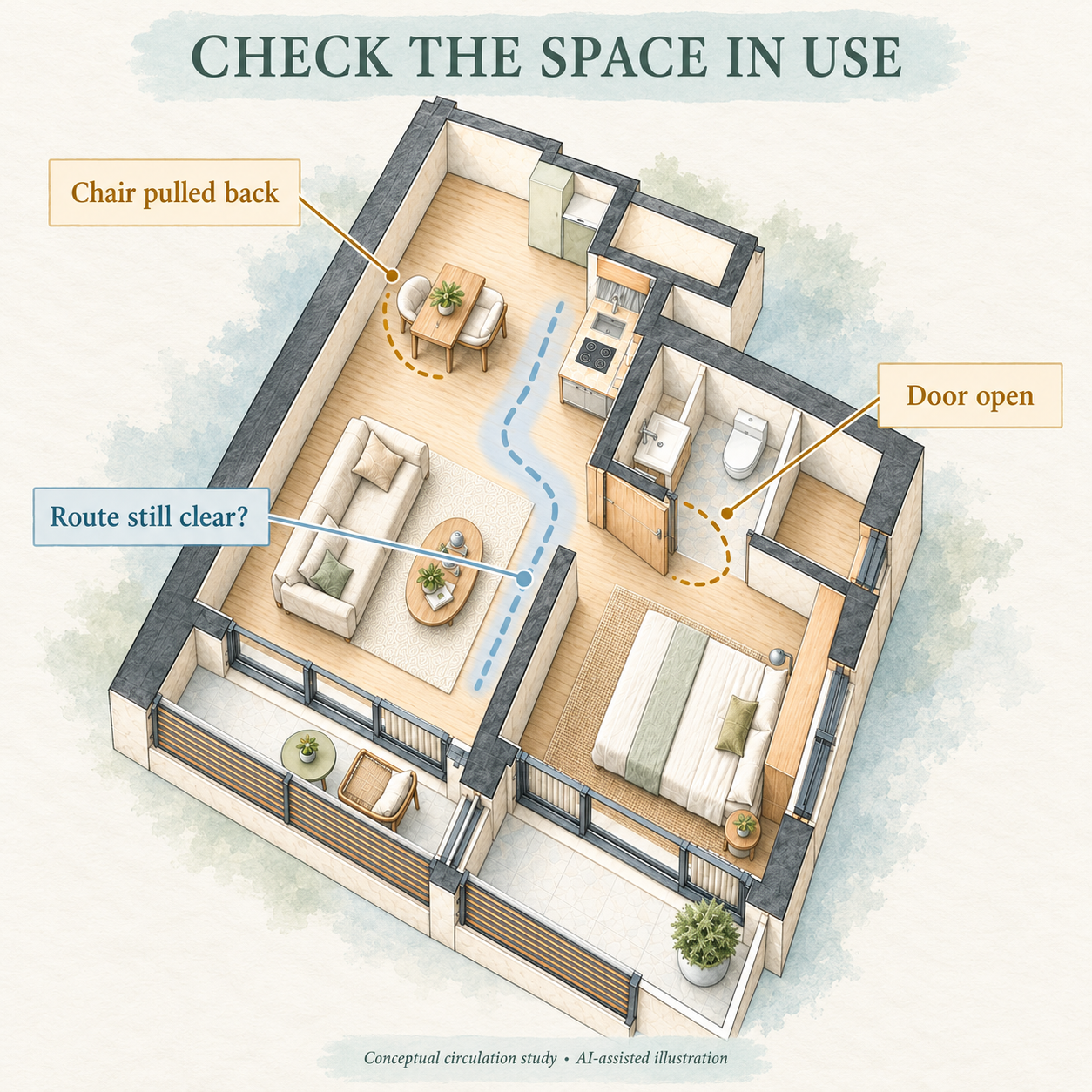
I would test this layout with a person sitting at the table and another carrying a cup towards the bedroom. The route should work without making someone get up. Reading, working and moving through the home should not constantly interrupt one another. The illustration invites that test; it does not prove the outcome.
Flexibility should offer a choice
A shared table can accommodate work and dinner at different times. But that apparent efficiency leaves someone responsible for gathering the laptop and papers, finding somewhere for them and restoring them later.
A tray and a nearby shelf may make the change easier. Their position still needs testing: the destination must be reachable without obstructing movement.
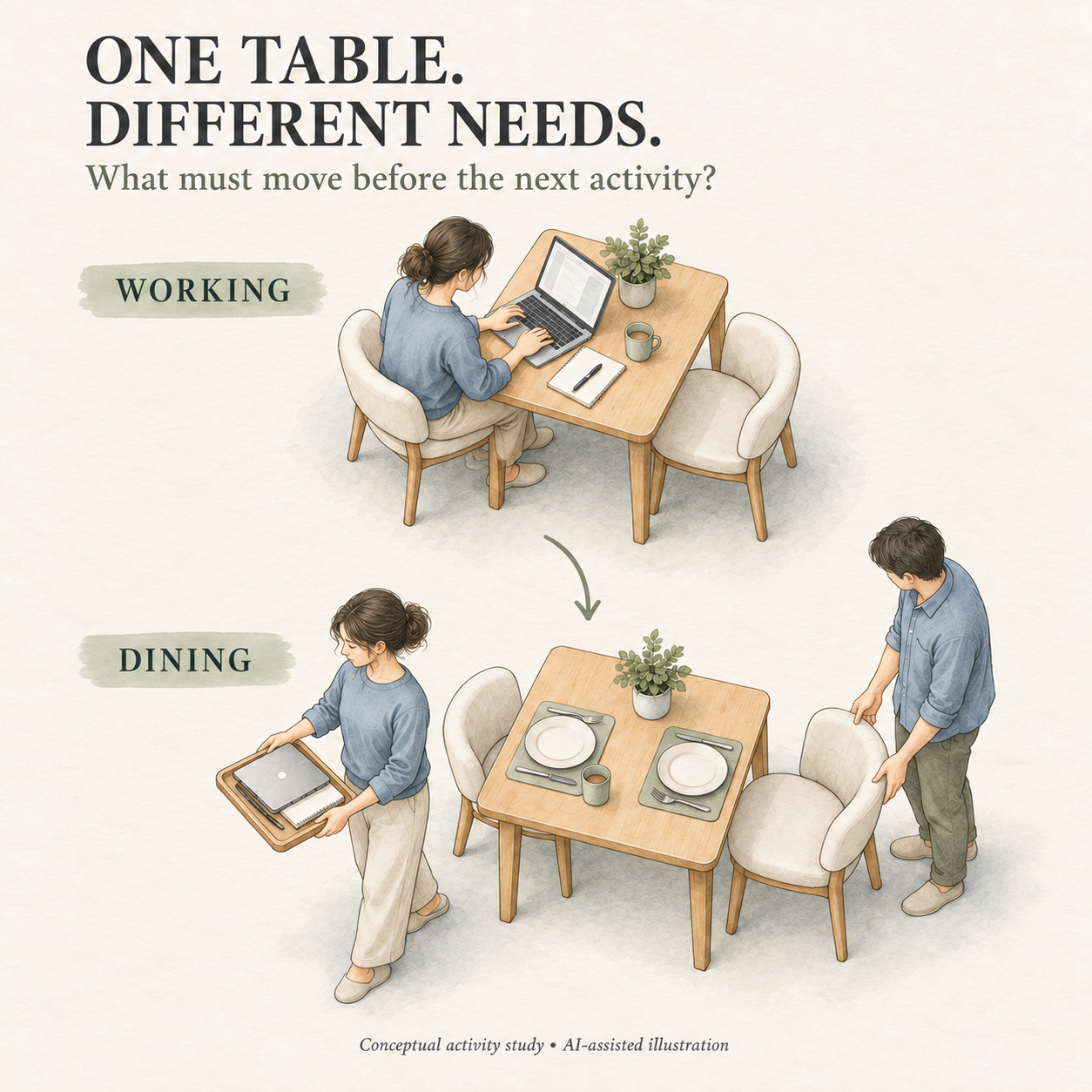
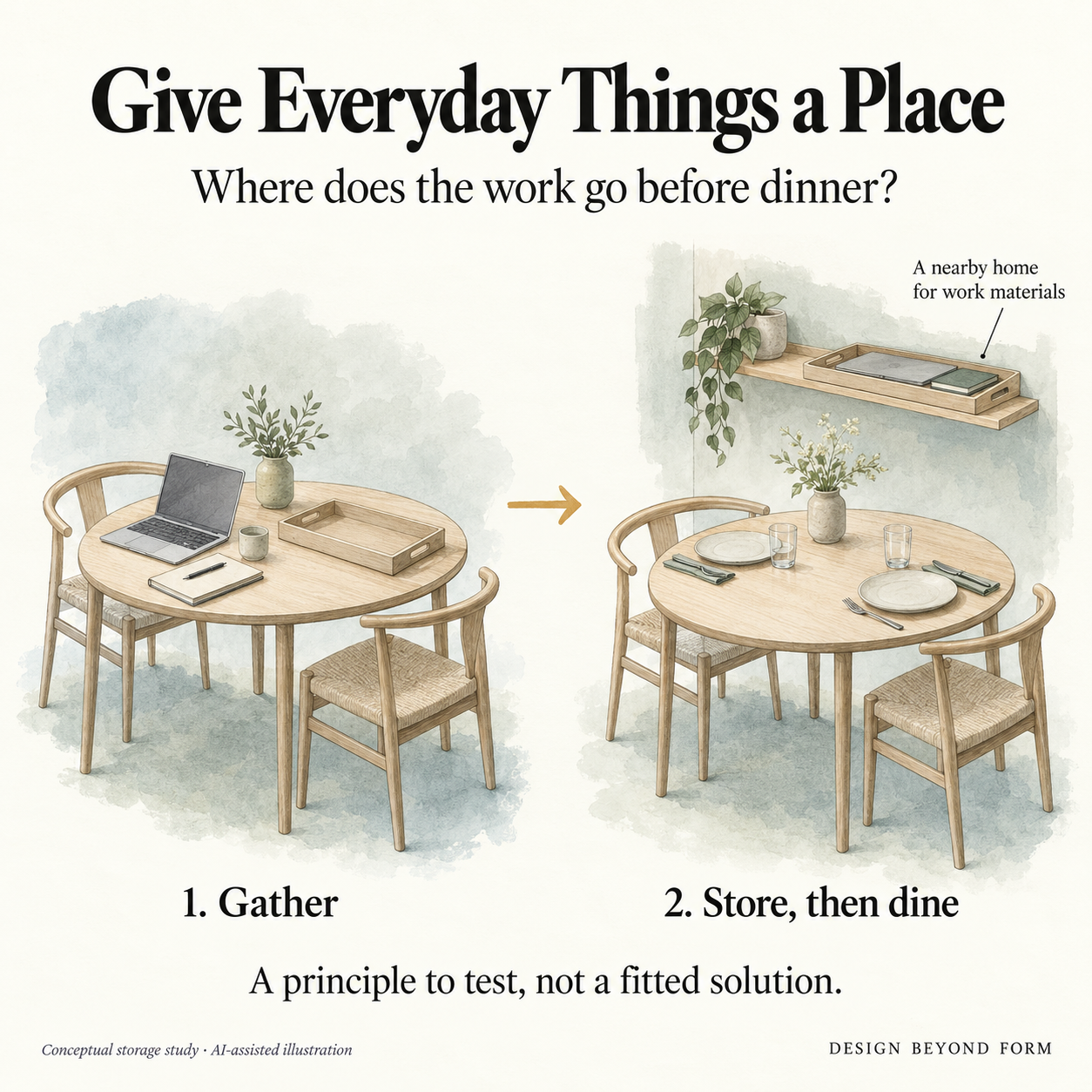
The central limitation remains: work must stop before dining begins. Easier resetting does not create simultaneous use.
Has the design saved space, or simply transferred the work to the person living there?
An extending table for occasional guests offers a choice. Rebuilding a room for every ordinary activity creates an obligation. Good flexibility should include the freedom to leave something unfinished.
Room for a life, not just its furniture
Some people prefer compact homes, and more floor area alone guarantees nothing. Better layouts can resolve avoidable conflicts. They cannot always supply missing privacy or enough room for independent activities; sometimes the space allowance itself is inadequate.
My experience is not a prescription for someone else’s budget. It is why I question plans celebrated only for how much they squeeze in. A home should offer room to rest, close a door and welcome another person, even when nobody has the energy to rearrange it.
Related PicksRelated Articles
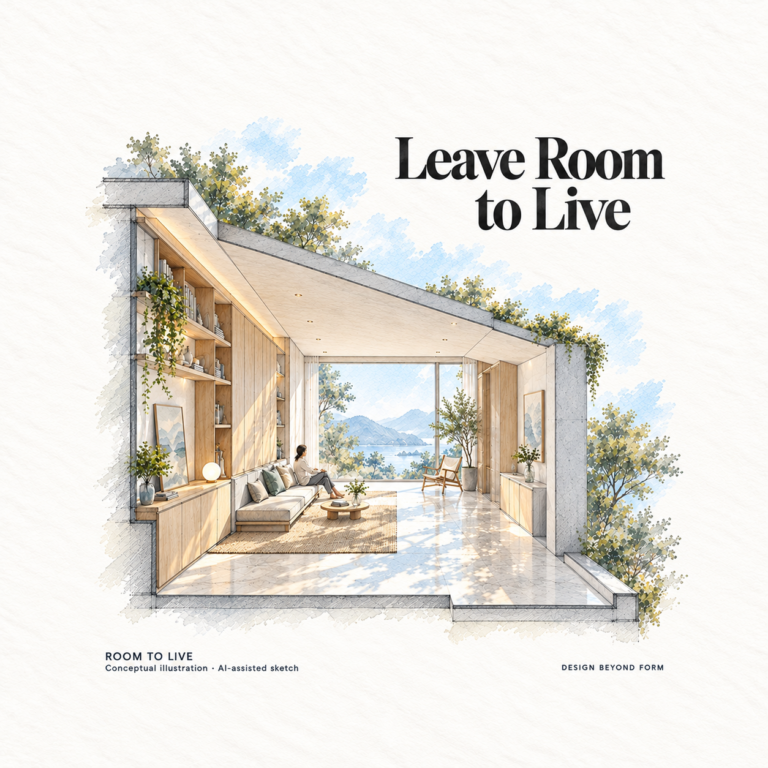
Shall We Really Need to Develop How to Design Small Spaces?
Explore how compact homes can support spaciousness and everyday well-being.
Context-Driven Design (2): A Journey of Problem-Solving and Discovery
Follow a design process shaped by site conditions and the relationships between daily activities.